Words to Describe Inequality in English
Lesson: Talking About Inequality
This is a lesson I teach to adults who want to discuss fairness and the gap between rich and poor in English, including people who work in policy, development and aid. Together we learn words like privilege, disadvantage and discrimination, and use them to give and defend real opinions.
In short: the key language in this lesson
Useful phrases
- Comparing different views: While some people say ___, I believe ___ because ___.
- Weighing pros and cons: On the one hand ___, but on the other hand ___.
- Imagining situations: If I were in that situation, I would ___ because ___.
Key words
- inequality:
- an unfair difference between people or groups
- gap:
- a big difference between two groups or amounts
- privilege:
- a special advantage that not everyone has
- disadvantage:
- something that makes success harder for a person
- discrimination:
- unfair treatment of a person because of who they are
Idioms and phrasal verbs
- add up:
- small things grow together into something big
- send out:
- post or email something to many people
- break the rules:
- do something you are not allowed to do
- birth lottery:
- the family and country you are born into are pure luck
This lesson is designed to be taught live, not studied alone. I create every lesson and teach it myself, one-to-one. In class, I guide you through each part, ask follow-up questions, correct your mistakes and help you say more.
Here you can see exactly what a lesson with me looks like. For my students, I build lessons like this around their own job and goals.
1 Warm-up
Look at some everyday situations and decide how fair they are. There are no right answers - the goal is to start talking about what fairness means to you.
We start with a relaxed chat. I ask these questions, you answer freely, and I note useful language for later.
- Do you think life is fair where you live? Why or why not?
- Is it fair that some people earn ten times more than others for similar work?
- Have you ever felt someone got an opportunity just because of who they knew?
- Do children from rich families have an easier start in life? How?
- What's one thing you would change to make things fairer in your country?
2 Key vocabulary
Before the reading, we go through 5 key words together: how to say them, what they mean, and how people really use them.
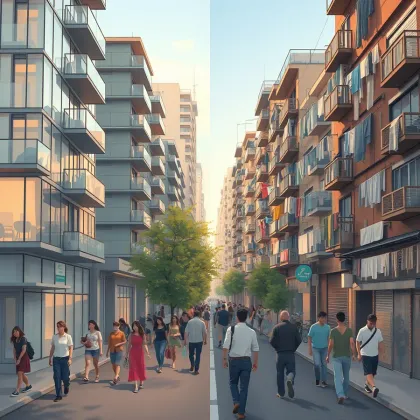
inequality noun
Pronunciation: /in-ek-WOL-i-tee/
an unfair difference between people or groups
- The city has grown richer, but inequality has grown with it.
- Inequality between rich and poor regions is a big political issue.
- She wrote an article about inequality in the workplace.
- I never really thought about inequality until I moved abroad.
Common phrases economic inequalitysocial inequalityreduce inequality
Word family inequal (rare)unequalequalequality
How to use it: Use it for unfair differences between groups, not small personal differences. Often used with 'between' or 'in'.
- Similar
- imbalance, unfairness, disparity
- Opposite
- equality, fairness
- Often used in
- news reports, politics, workplace discussions
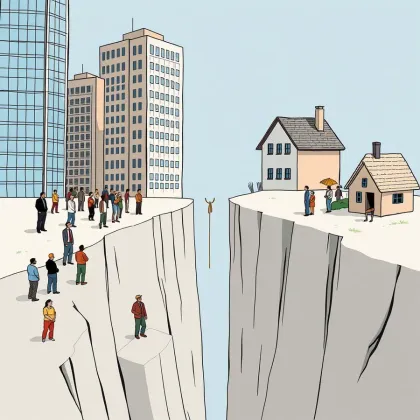
gap noun
Pronunciation: /gap/
a big difference between two groups or amounts
- The gap between the highest and lowest salaries keeps growing.
- There's a huge gap between what men and women earn in some industries.
- The gap between city and village schools is easy to see.
- Closing the gap will take years, not months.
Common phrases the wealth gapthe pay gapclose/narrow the gap
Word family gap (noun)gap (verb, 'to gap')gaping
How to use it: Very common in news: 'the gender pay gap', 'the gap between rich and poor'. Also used for missing time or space.
- Similar
- difference, divide, distance
- Opposite
- similarity, balance
- Often used in
- news headlines, economics, education debates
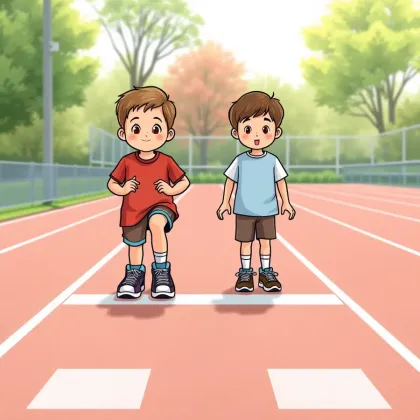
privilege noun
Pronunciation: /PRIV-uh-lij/
a special advantage that not everyone has
- Going to a good school for free was a privilege he never questioned.
- Speaking the local language from birth is a kind of privilege.
- She admits her comfortable childhood gave her many privileges.
- Having parents who could help with rent is a privilege many don't have.
Common phrases a privileged backgroundwhite privilegeenjoy a privilege
Word family privileged (adjective)underprivileged (adjective)
How to use it: Often used to describe advantages people have without noticing. 'Underprivileged' is a softer, common way to say 'poor'.
- Similar
- advantage, benefit, head start
- Opposite
- hardship, disadvantage
- Often used in
- social debates, personal stories, media discussions
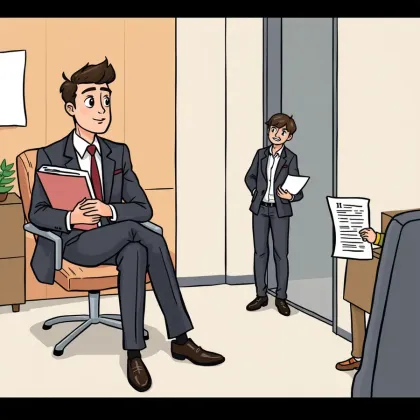
disadvantage noun
Pronunciation: /dis-uh-VAN-tij/
something that makes success harder for a person
- Growing up without a computer was a real disadvantage at school.
- Not having connections is a big disadvantage when job hunting.
- Children from poor areas face disadvantage from their first day at school.
- Her lack of experience put her at a disadvantage in the interview.
Common phrases at a disadvantageput someone at a disadvantagedisadvantaged background
Word family disadvantaged (adjective)advantage (noun)advantageous (adjective)
How to use it: Common pattern: 'be/put someone at a disadvantage'. Also used for the negative side of a choice: 'The main disadvantage of city life is the noise.'
- Similar
- drawback, handicap, setback
- Opposite
- advantage, benefit
- Often used in
- job interviews, school discussions, debates
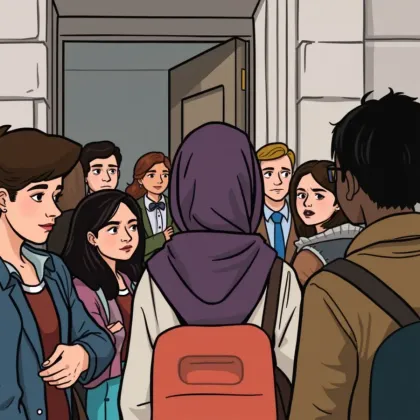
discrimination noun
Pronunciation: /dis-krim-uh-NAY-shun/
unfair treatment of a person because of who they are
- She left the company after experiencing discrimination during promotions.
- Discrimination against older workers is still common in some industries.
- The law bans discrimination based on gender or religion.
- He says he faced discrimination when landlords saw his name.
Common phrases face discriminationracial discriminationdiscrimination based on
Word family discriminate (verb)discriminatory (adjective)
How to use it: Always negative in this meaning. Followed by 'against' or 'based on'. Note: 'discriminating' can also mean having good taste - a rare, positive use.
- Similar
- unfair treatment, bias, prejudice
- Opposite
- fairness, equal treatment
- Often used in
- workplace, housing, news stories
3 Reading
A short article about two people who grew up in the same city but had very different chances in life.
In class, you read the text aloud. I help with pronunciation and natural rhythm, and then we talk about it.
Two Starts in Life
Maya and Daniel grew up in the same city, only a few kilometres apart. But their lives could not have started more differently. Maya went to a crowded school with old books and three students sharing one desk. Daniel's school had small classes, new laptops and a football pitch.
The gap between them was not really about effort. It was about money and luck. Daniel's parents owned their home and could pay for extra lessons. Maya's family worked hard too, but every euro went on rent and food. Economists call this kind of inequality a 'birth lottery' - you don't choose your ticket.
Daniel also enjoyed a quiet privilege he never noticed. When he looked for his first job, his father's friend gave him an interview. Maya sent out sixty applications and heard nothing. Nobody was cruel to her, and nobody broke the rules. The system simply helped one of them more than the other.
Over time, small disadvantages add up. Maya took a lower-paid job to support her family, so she had no time or money to study further. Daniel moved from job to job, each one better paid. Twenty years later, he earns four times what she does. Neither of them thinks this is fair, but neither knows how to change it.
Some people say the answer is discrimination - treating people unfairly because of their background, gender or accent. Others point to bigger causes, like housing prices and school funding. Most agree on one thing: talent is spread evenly, but opportunity is not. The question is what we do about it.
4 Comprehension
We check what you understood from the reading. You explain your answer in your own words. (The answers are under each question.)
-
What does 'inequality' mean?
Show answer
An unfair difference between people or groups
'Inequality' describes unfair differences, for example between rich and poor. 'Equality' is the opposite - everyone being treated the same.
-
Which sentence uses 'gap' correctly?
Show answer
The gap between the two salaries is about two thousand euros a month.
'Gap' is a noun meaning a big difference between two things. The other sentences use it wrongly as a verb or adjective.
-
In which situation would you use 'privilege'?
Show answer
When someone has an advantage that others don't have
A 'privilege' is a special advantage, often one people are born with and don't notice.
-
What does 'disadvantage' mean?
Show answer
Something that makes success harder for a person
A 'disadvantage' is anything that puts you in a weaker position, like lacking money, contacts or time.
-
Which sentence uses 'discrimination' correctly?
Show answer
He faced discrimination when no landlord would rent to him because of his accent.
'Discrimination' means unfair treatment because of who someone is. It's a noun, so the other sentences use it incorrectly.
5 Idioms and phrasal verbs
You find each expression in the reading and guess what it means. Then we practise using it to talk about your own life and work.
add up
From the readingOver time, small disadvantages add up.
What do you think it means? Show meaning
small things grow together into something big (similar: build up)
Example: Coffee costs seem small, but they add up over a month.
- In this meaning it has no object - things add up, you don't add up things. ✓ small costs add up ✗ add up small costs
- Also used literally for maths: 'The numbers don't add up' means something is wrong or suspicious.
Your turn: Can you think of something small in your life that adds up over time - good or bad?
send out
From the readingMaya sent out sixty applications and heard nothing.
What do you think it means? Show meaning
post or email something to many people (similar: send)
Example: She sent out invitations to the whole class.
- You can split it: 'sent them out'. The 'out' suggests spreading to many people.
- Common with applications, invitations, emails and CVs.
Your turn: Have you ever sent out lots of applications or messages? What happened?
break the rules
From the readingNobody was cruel to her, and nobody broke the rules.
What do you think it means? Show meaning
do something you are not allowed to do (similar: cheat)
Example: He broke the rules by using his phone during the exam.
- Picture the rules as a stick that can snap in half - that's how you break one.
- The opposite is 'play by the rules' - to always behave fairly.
Your turn: Have you ever seen someone break the rules to get ahead? What happened?
birth lottery
From the readingEconomists call this kind of inequality a 'birth lottery' - you don't choose your ticket.
What do you think it means? Show meaning
the family and country you are born into are pure luck
Example: Being born in a wealthy country is winning the birth lottery.
- A lottery is a game of pure luck - the picture is that your parents and start in life are like a random ticket.
- You can also say 'win the birth lottery' (lucky start) or 'lose it' (unlucky start).
Your turn: Do you feel you won or lost the birth lottery? What did your start in life give you?
6 Sentence frames
Practice expressing ideas about inequality and fairness.
We start with the simple frame and step up to longer, more natural sentences. You fill the gaps with your own ideas, and I help you sound more fluent.
Comparing different views
Grammar contrast connectors (but, while, however)opinion phrases
-
Simple
Some people think ___, but I think ___.
State one view, then your own. Simple and safe.
Example answers
- Some people think hard work is enough, but I think luck matters too.
- Some people think the system is fair, but I think it favours the rich.
- Some people think inequality is normal, but I think we can reduce it.
-
Stronger
While some people say ___, I believe ___ because ___.
Add a reason to support your opinion.
Example answers
- While some people say anyone can succeed, I believe your starting point matters because rich parents can open doors.
- While some people say the pay gap is exaggerated, I believe it's real because I've seen it at work.
- While some people say privilege doesn't exist, I believe it does because I notice who gets the easy interviews.
Weighing pros and cons
Grammar 'the main advantage/disadvantage is'comparatives
-
Simple
The main advantage is ___. The main disadvantage is ___.
Name one plus and one minus.
Example answers
- The main advantage is fairness. The main disadvantage is the cost.
- The main advantage is equal opportunity. The main disadvantage is higher taxes.
- The main advantage is less discrimination. The main disadvantage is slower hiring.
-
Stronger
On the one hand ___, but on the other hand ___.
Balance two sides in one sentence.
Example answers
- On the one hand free education closes the gap, but on the other hand taxpayers have to pay for it.
- On the one hand quotas reduce discrimination, but on the other hand some people feel they're unfair.
- On the one hand a minimum wage helps the poor, but on the other hand some small businesses struggle.
Imagining situations
Grammar second conditionalwould + verb
-
Simple
If I ___, I would ___.
Simple imaginary situation and result.
Example answers
- If I won the lottery, I would help my family first.
- If I were a teacher, I would give extra help to struggling students.
- If I could vote on it, I would support free school meals.
-
Stronger
If I were in that situation, I would ___ because ___.
Add a reason for your choice.
Example answers
- If I were in that situation, I would look for a fairer employer because life's too short.
- If I were in that situation, I would speak up because silence protects the unfair system.
- If I were in that situation, I would ask for help because nobody succeeds alone.
7 Fill in the blanks
A quick practice with the new words: you choose the right word for each gap.
Word box inequalitygapprivilegedisadvantagediscrimination
Last year, a report looked at life in two neighbouring towns. It found a huge 1 between them: one town had good schools and jobs, while the other had high unemployment. People in the second town faced real 2 from birth, and some said they had experienced 3 when applying for jobs in the richer town. Local leaders admitted that years of 4 had made things worse, and that families with money enjoyed a quiet 5 the poorer families never had. Now the towns are working together to change that.
Show answers
- gap
- disadvantage
- discrimination
- inequality
- privilege
8 Sentence unscramble
You put the words in order and say the sentence out loud.
-
gapkeepsgrowingpoorthebetweenandrich
Show answer
The gap between rich and poor keeps growing.
-
whendiscriminationappliedsheshejobfacedthefor
Show answer
She faced discrimination when she applied for the job.
-
upgrowinghimbigputpooraatdisadvantage
Show answer
Growing up poor put him at a big disadvantage.
9 Discussion
The main speaking part of the lesson. We discuss each question together, and you use the new words and sentence frames. I ask follow-up questions and correct your mistakes as we go.
-
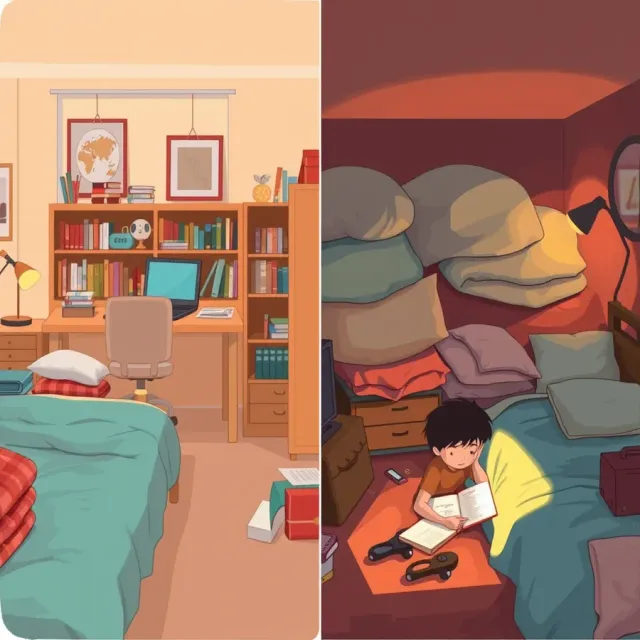
Imagine two children starting school on the same day. One has a quiet room, a laptop and parents who read with her every night. The other shares a small flat with six people and works evenings to help his family. Both are clever and hardworking.
Do you think these two children have the same chance of success? What would help the second child most?
-
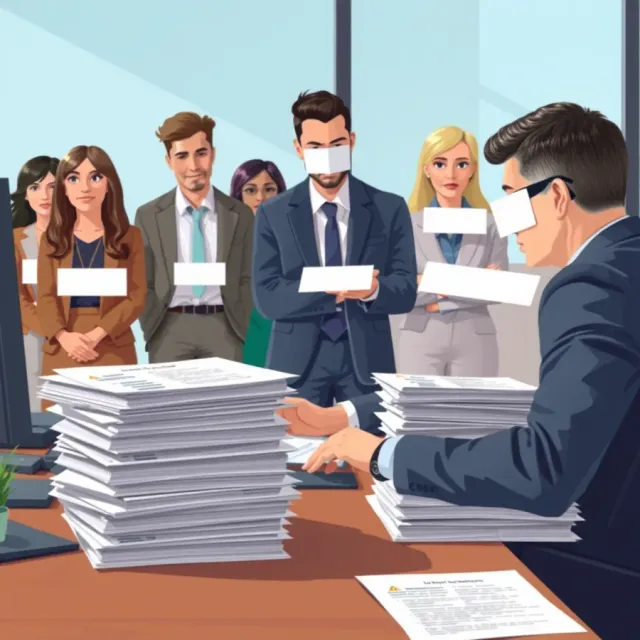
In many countries, people with certain names, accents or ages get fewer callbacks for jobs, even with the same CV. Some companies now hide names and photos on applications to prevent this.
Have you or someone you know ever felt treated unfairly at work or when job hunting? Do you think hiding names on CVs is a good idea?
-

Some people believe that anyone who works hard can become successful, no matter where they start. Others say that privilege - money, contacts, the right postcode - decides most of it, and talent without connections often goes nowhere.
Which side are you closer to? Has hard work paid off for you, or has luck played a bigger role?
-
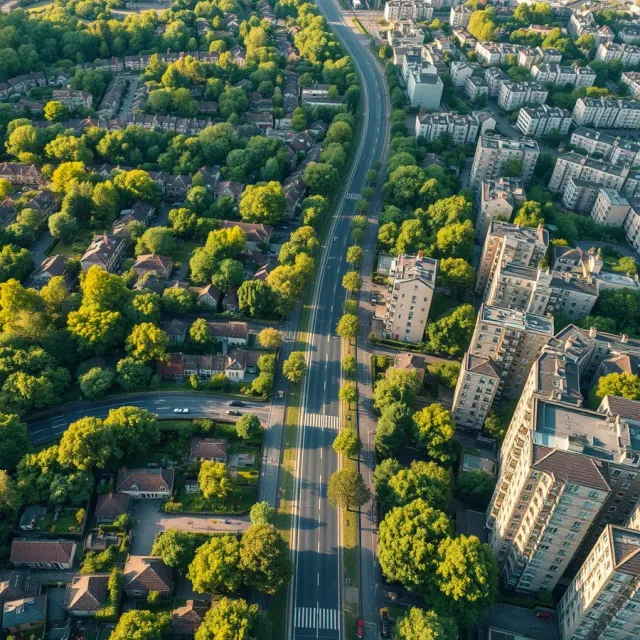
Cities around the world are getting more expensive. People with well-paid jobs can buy homes near good schools and jobs, while others move further out and spend hours commuting. Over time, rich and poor neighbourhoods drift apart.
Is your city becoming divided this way? What happens to a city when rich and poor live completely separate lives?
-
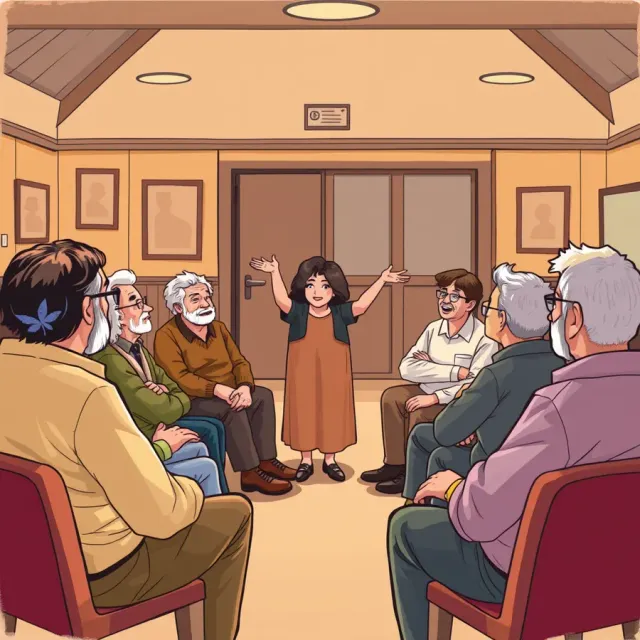
Governments try different things: free education, higher minimum wages, taxes on the very rich, support for struggling families. Supporters say these reduce inequality; critics say they cost too much or punish success.
If you could change one thing to make your country fairer, what would it be? Why that and not something else?
10 Quiz
A short review at the end of the lesson to check what you remember.
-
Which word describes a big difference between two groups, like rich and poor?
Show answer
Gap
A 'gap' is a big difference between two amounts or groups, as in 'the wealth gap'.
-
True or false: 'inequality' and 'equality' mean the same thing.
Show answer
False
'Inequality' means unfair differences; 'equality' means everyone being treated the same. They're opposites.
-
Someone says: 'I never had to worry about money, and I got my first job through a family friend.' What are they describing?
Show answer
Privilege
These are unearned advantages - a 'privilege' - that not everyone has.
-
Which phrase means 'unfair treatment because of who someone is'?
Show answer
Discrimination
'Discrimination' is unfair treatment based on things like race, gender, age or accent.
-
True or false: 'disadvantage' can only describe poor people.
Show answer
False
'Disadvantage' also describes the negative side of any situation, like 'the disadvantage of living far from work'.
-
In the story, 'small disadvantages add up'. What does 'add up' mean here?
Show answer
Together they become a big problem
'Add up' means small things grow together into something much bigger over time.
Lesson created with PlanwiseESL.
Useful for: English for diplomats, UN staff and aid workers
More sample lessons
The Great Game: How Countries Compete for Power
Learn words to talk about geopolitics in English: alliance, sanctions, sovereignty, superpower and more. A B2 discussion lesson I teach live, one-to-one.
See the lesson → Level B2Diplomatic English: How to Disagree Politely
Learn how to disagree diplomatically in English: soften your words, push back politely and find common ground. A B2 speaking lesson I teach live.
See the lesson → Level B2The Pros and Cons of International Aid
Discuss the pros and cons of international aid in English. Learn words like crisis, sustainable and corruption. A B2 speaking lesson I teach live.
See the lesson →All sample lessons: Health and Fitness Vocabulary in English · Vocabulary to Talk About Films in English · Vocabulary to Talk About Money in English · Vocabulary to Talk About the Environment in English · Words to Describe a Leader in English · Explaining a Technical Problem in English · Handling Price Objections in English · How to Keep a Conversation Going in English · Patient Handover English for Doctors and Nurses · Presenting Monthly Results in English · Understanding Contracts in Plain English · How to Answer Questions After a Presentation in English · How to Talk About Your Career Goals and Leadership in an Interview · What British Colleagues Really Mean: Polite, Indirect English at Work · Vocabulary to Talk About AI in English · Business Small Talk in English · How to Stop Translating in Your Head When You Speak English