Explaining a Technical Problem in English
Lesson: When Things Break Down: Explaining a Technical Problem
This is a lesson I teach to engineers and technical teams who need to explain problems in English. Together we learn words like glitch, workaround and troubleshoot, and practise explaining what went wrong and how to fix it.
In short: the key language in this lesson
Useful phrases
- Explaining what went wrong: First ___ , then ___ , so we had to ___ .
- Comparing quick fixes and real solutions: A workaround is good because ___ , but it could cause problems if ___ .
- Imagining technical problems and solutions: If ___ malfunctioned at work, I would first ___ , then ___ .
Key words
- glitch:
- a small fault that makes something stop working for a short time
- troubleshoot:
- to check things step by step to find why something is not working
- malfunction:
- a failure of a machine or system to work correctly
- workaround:
- a temporary way to deal with a problem instead of fixing it completely
- pinpoint:
- to find or describe something exactly and precisely
Idioms and phrasal verbs
- run fine:
- working well, with no problems
- work through:
- deal with things one at a time until finished
- slow down:
- make or become slower
- backfire:
- have the opposite result from what you wanted
This lesson is designed to be taught live, not studied alone. I create every lesson and teach it myself, one-to-one. In class, I guide you through each part, ask follow-up questions, correct your mistakes and help you say more.
Here you can see exactly what a lesson with me looks like. For my students, I build lessons like this around their own job and goals.
1 Warm-up
Talk about machines and technology that have let you down, and how you dealt with it.
We start with a relaxed chat. I ask these questions, you answer freely, and I note useful language for later.
- What piece of technology do you use most every day?
- When something breaks at home, do you try to fix it yourself or call someone?
- Have you ever had a device stop working at the worst possible moment?
- Do you think machines break down more often than they used to, or less?
- When a friend asks you for tech help, do you enjoy it or find it stressful?
2 Key vocabulary
Before the reading, we go through 5 key words together: how to say them, what they mean, and how people really use them.

glitch noun
Pronunciation: /GLITCH/
a small fault that makes something stop working for a short time
- The app crashed because of a glitch in the latest update.
- There was a glitch in the booking system, so we got two tickets by mistake.
- Sorry, my screen froze — just a little glitch, give me a second.
- I lost my essay because of a glitch, so now I save everything twice.
Common phrases a small glitcha software glitchfix a glitch
Word family glitchy (adjective)
How to use it: Use 'glitch' for small, temporary faults in machines, software or systems — not for serious breakdowns. It often suggests the problem is annoying but not dangerous.
- Similar
- bug, fault, hiccup
- Opposite
- smooth operation, perfect function
- Often used in
- apps and websites, office systems, gaming
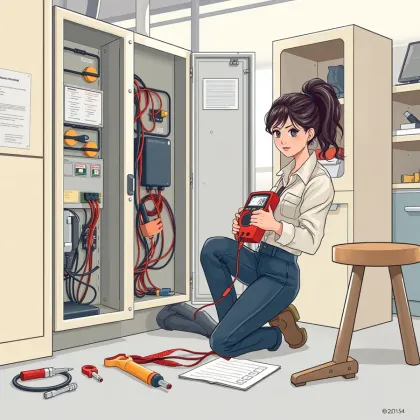
troubleshoot verb
Pronunciation: /TRUB-ul-shoot/
to check things step by step to find why something is not working
- I spent an hour troubleshooting my internet before calling the provider.
- The manual suggests troubleshooting the printer before calling a technician.
- She troubleshooted the sound system for twenty minutes and found a loose cable.
- Can you help me troubleshoot this? The screen keeps going black.
Common phrases troubleshoot a problemtroubleshooting stepstroubleshoot an issue
Word family troubleshooting (noun)troubleshooter (noun)
How to use it: Use 'troubleshoot' when someone checks possible causes one by one. It's very common in tech support and at work. The past form is usually 'troubleshooted' or sometimes 'troubleshoot'.
- Similar
- diagnose, check, investigate
- Opposite
- ignore, guess
- Often used in
- IT help desks, factories, home repairs
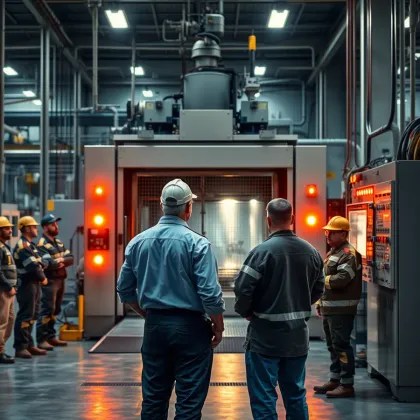
malfunction noun
Pronunciation: /mal-FUNK-shun/
a failure of a machine or system to work correctly
- A malfunction in the elevator left us stuck between floors.
- The flight was delayed because of a malfunction in the navigation system.
- Engineers traced the malfunction to a worn-out valve.
- The report blamed the accident on a malfunction, not on human error.
Common phrases a serious malfunctioncause a malfunctiona malfunction in the system
Word family malfunction (verb)malfunctioning (adjective)
How to use it: 'Malfunction' sounds more serious than 'glitch' — use it for real failures of machines or systems, especially in news, reports and safety contexts. It works for both the event and the broken state.
- Similar
- failure, breakdown, fault
- Opposite
- smooth running, correct operation
- Often used in
- news reports, factories, transport

workaround noun
Pronunciation: /WERK-uh-rownd/
a temporary way to deal with a problem instead of fixing it completely
- The printer is broken, but our workaround is sending files to the other office.
- There's no official fix yet, but there's a simple workaround.
- Her workaround saved us hours of waiting.
- The workaround works for now, but we need a permanent solution.
Common phrases a temporary workaroundfind a workarounda simple workaround
Word family work around (phrasal verb)
How to use it: Very common in workplaces and tech talk. A workaround is not the real fix — it just keeps things moving until the proper solution arrives. Often used with 'temporary' or 'for now'.
- Similar
- quick fix, stopgap, temporary solution
- Opposite
- permanent fix, proper solution
- Often used in
- offices, IT, everyday life

pinpoint verb
Pronunciation: /PIN-poynt/
to find or describe something exactly and precisely
- It took her an hour to pinpoint where the noise was coming from.
- Doctors couldn't pinpoint the cause of his headaches at first.
- The map app pinpointed our location within seconds.
- It's hard to pinpoint exactly when the problem started.
Common phrases pinpoint the causepinpoint the problempinpoint exactly
Word family pinpoint (adjective)
How to use it: Use 'pinpoint' when someone identifies the exact cause, place or moment of something. It often appears with 'the cause', 'the problem' or 'exactly'. It suggests difficulty — you pinpoint something after searching.
- Similar
- identify, locate, determine
- Opposite
- guess, overlook
- Often used in
- engineering, medicine, detective work
3 Reading
A short story about an engineer whose machine breaks down at the worst possible time — and how she handles it.
In class, you read the text aloud. I help with pronunciation and natural rhythm, and then we talk about it.
The Night the Machine Stopped
Last Monday, Maya arrived at work to bad news. The packaging machine at her factory had stopped during the night shift. 'It just malfunctioned,' the night manager told her. 'One minute it was running fine, the next everything froze.' About four thousand boxes were waiting, and customers expected delivery by Friday.
Maya's first job was to pinpoint the cause. Was it a broken part, a power cut, or something in the software? With so many possibilities, she started with the simplest checks and worked through them one by one.
She spent the whole morning troubleshooting: testing the sensors, checking the cables, restarting the system twice. Around noon, she finally managed to pinpoint it — a small glitch in the software that stopped the machine whenever two boxes arrived too close together.
Fixing the glitch properly would take the software company three days. That was too long. So Maya created a workaround: an extra sensor that slowed the line down just enough to avoid the problem. Production restarted by the evening.
Her manager was impressed — not only with the fix, but with how clearly Maya had explained the malfunction to everyone, from engineers to warehouse staff. 'A good engineer doesn't just solve the problem,' he said. 'She helps everyone understand it.'
4 Comprehension
We check what you understood from the reading. You explain your answer in your own words. (The answers are under each question.)
-
What does 'malfunction' mean?
Show answer
To stop working correctly
A malfunction is when a machine or system fails to work the way it should. It suggests a real failure, more serious than a small glitch.
-
Which sentence uses 'pinpoint' correctly?
Show answer
The map helped us pinpoint exactly where the leak was coming from.
'Pinpoint' means to find or identify something exactly. You pinpoint a cause, a location or a moment — not an appointment or a plan.
-
What is a 'workaround'?
Show answer
A temporary way to keep things running until a real fix is found
A workaround deals with a problem for now without solving it completely. It keeps things moving until the proper solution is ready.
-
In which situation would you 'troubleshoot'?
Show answer
When your computer keeps crashing and you want to find out why
To troubleshoot means to check possible causes step by step until you find why something isn't working.
-
What does 'glitch' mean?
Show answer
A small fault that makes something stop working for a short time
A glitch is a small, often temporary fault, especially in software or electronic systems. It's annoying but usually not serious.
5 Idioms and phrasal verbs
You find each expression in the reading and guess what it means. Then we practise using it to talk about your own life and work.
run fine
From the reading'One minute it was running fine, the next everything froze.'
What do you think it means? Show meaning
working well, with no problems (similar: work well)
Example: My old laptop still runs fine for simple tasks.
- You can also say 'run smoothly' for extra emphasis. ✓ The app runs fine now. ✗ The app runs finely now.
- Very common when talking about machines, cars and software.
Your turn: What's something you own that still runs fine, even though it's old?
work through
From the readingWith so many possibilities, she started with the simplest checks and worked through them one by one.
What do you think it means? Show meaning
deal with things one at a time until finished (similar: go through)
Example: I worked through all my emails before lunch.
- The object goes between 'work' and 'through': work through the list, work through a problem.
- Also used for feelings: 'work through a difficult time'.
Your turn: When you have a big list of tasks, how do you work through it? Do you start with the easy ones?
slow down
From the readingan extra sensor that slowed the line down just enough to avoid the problem
What do you think it means? Show meaning
make or become slower (similar: reduce speed)
Example: You need to slow down — you're working too fast and making mistakes.
- Separable: 'slow the car down' or 'slow down the car' are both correct.
- Also used for people and life: 'slow down and enjoy the weekend'.
Your turn: Do you ever need to slow down in life? What helps you do that?
backfire
What do you think it means? Show meaning
have the opposite result from what you wanted (similar: go wrong)
Example: His plan to save time backfired and cost him a whole weekend.
- The picture: a gun that fires backwards instead of forwards.
- Often used with plans, tricks and shortcuts: 'the plan backfired'.
Your turn: Can you remember a plan that backfired on you? What did you learn from it?
6 Sentence frames
Practice explaining what went wrong, comparing solutions, and imagining tricky situations.
We start with the simple frame and step up to longer, more natural sentences. You fill the gaps with your own ideas, and I help you sound more fluent.
Explaining what went wrong
Grammar past simple for eventssequencing words (first, then, finally)
-
Simple
The problem was that ___ stopped working.
A simple way to state what broke. Fill the blank with the thing that failed.
Example answers
- The problem was that my printer stopped working.
- The problem was that the elevator stopped working.
- The problem was that our internet stopped working.
-
Stronger
First ___ , then ___ , so we had to ___ .
Tell the story of the problem in order, ending with the action you took.
Example answers
- First the screen froze, then it made a strange noise, so we had to turn it off.
- First the app crashed, then it wouldn't reopen, so we had to reinstall it.
- First the lights flickered, then everything went dark, so we had to call an electrician.
Comparing quick fixes and real solutions
Grammar comparativesbecause / however for reasons
-
Simple
The quick fix is ___ , but the real fix is ___ .
Name both options simply and put them side by side.
Example answers
- The quick fix is restarting it, but the real fix is buying a new one.
- The quick fix is using tape, but the real fix is replacing the part.
- The quick fix is turning it off and on, but the real fix is updating the software.
-
Stronger
A workaround is good because ___ , but it could cause problems if ___ .
Give one advantage and one risk of the temporary solution.
Example answers
- A workaround is good because it saves time, but it could cause problems if people forget about it.
- A workaround is good because production continues, but it could cause problems if the machine gets worse.
- A workaround is good because it's free, but it could cause problems if it hides a bigger fault.
Imagining technical problems and solutions
Grammar second conditionalwould for hypothetical results
-
Simple
If my ___ stopped working, I would ___ .
One simple hypothetical cause and reaction.
Example answers
- If my laptop stopped working, I would take it to a repair shop.
- If my car stopped working, I would call a mechanic.
- If my fridge stopped working, I would check the plug first.
-
Stronger
If ___ malfunctioned at work, I would first ___ , then ___ .
Imagine a workplace problem and a two-step response.
Example answers
- If the printer malfunctioned at work, I would first restart it, then check the manual.
- If the payment system malfunctioned at work, I would first tell my manager, then call support.
- If the air conditioning malfunctioned at work, I would first open the windows, then report it.
7 Fill in the blanks
A quick practice with the new words: you choose the right word for each gap.
Word box glitchtroubleshootmalfunctionworkaroundpinpoint
Last winter, our office heating system 1ed during the coldest week of the year. Nobody could 2 the cause at first, so we used two small electric heaters as a temporary 3. Eventually, the maintenance team discovered a 4 in the thermostat's software, and they spent the whole afternoon 5ing until everything worked properly again.
Show answers
- malfunction
- pinpoint
- workaround
- glitch
- troubleshoot
8 Sentence unscramble
You put the words in order and say the sentence out loud.
-
inpinpointedengineerglitchthequicklyThesoftwarethe
Show answer
The engineer quickly pinpointed the glitch in the software.
-
simpleaWerealworkaroundusedfixwhilewaitingforthe
Show answer
We used a simple workaround while waiting for the real fix.
-
HersoITshelaptoptroubleshootmalfunctionedtocalledagainit
Show answer
Her laptop malfunctioned again, so she called IT to troubleshoot it.
9 Discussion
The main speaking part of the lesson. We discuss each question together, and you use the new words and sentence frames. I ask follow-up questions and correct your mistakes as we go.
-

Technology is everywhere in our lives, and it never behaves perfectly. Phones freeze, laptops crash, and printers refuse to print right before something important. Most people have at least one memorable story about a device letting them down at exactly the wrong moment.
Tell me about a time a device let you down. What happened, and what did you do?
-

Maya's manager praised her not just for fixing the machine, but for explaining the problem clearly to everyone. That's a real skill: engineers, doctors and IT experts all need to translate complicated things into plain language for the rest of us, and not everyone can do it well.
Do you find it easy to explain technical things to people who know nothing about them? How do you do it?
-
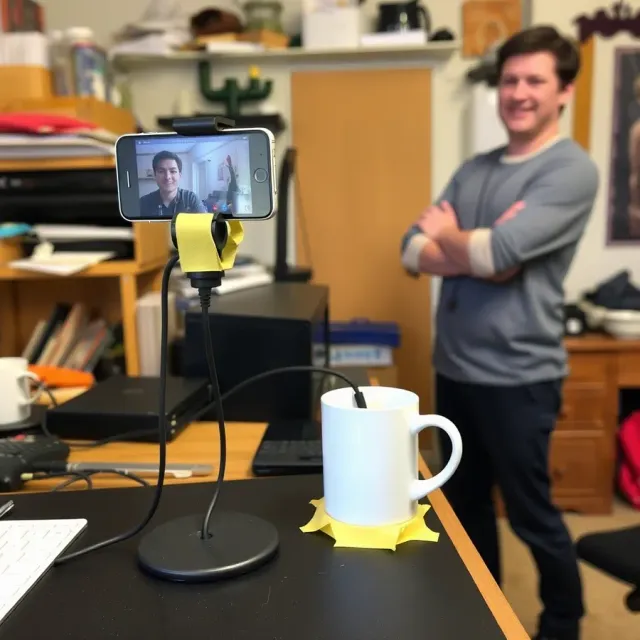
Maya couldn't fix the software for three days, so she invented a workaround that kept the factory running. People do this all the time — using a book to prop up a table, or emailing a document when the file-sharing system is down. Some workarounds are clever; others create new problems later.
Have you ever found a clever workaround for a problem? Tell me about it. Did it cause any new problems?
-
When something breaks, there are usually two paths: patch it up quickly and move on, or take the time to fix it properly. Quick fixes save time today but can cost more tomorrow. Real fixes take patience but give peace of mind. People disagree about which approach makes more sense.
When something breaks, do you prefer a quick fix or doing it properly? Has that ever backfired on you?
-

Imagine you wake up tomorrow and the internet in your whole city has stopped working — no email, no messaging, no maps, no online banking. Engineers say it could take a full day to pinpoint the fault and restore everything. For one day, everyone has to manage without it.
What would you do if the internet stopped working in your city for a whole day? Would it change your day much?
10 Quiz
A short review at the end of the lesson to check what you remember.
-
The printer suddenly stopped working for no clear reason. Which word best describes this?
Show answer
a malfunction
A malfunction is when a machine fails to work correctly. A workaround is a solution, not a problem, and 'pinpoint' is a verb meaning to identify exactly.
-
True or false: a glitch is usually a small problem, not a complete breakdown.
Show answer
True
A glitch is a small, often temporary fault, especially in software. Bigger, more serious failures are usually called malfunctions or breakdowns.
-
You can't fix the bug today, but you find another way to keep working. You've found a...
Show answer
workaround
A workaround is a temporary way to keep things running until the real fix is available.
-
True or false: 'troubleshooting' means fixing a problem without checking what caused it.
Show answer
False
Troubleshooting means checking possible causes step by step to find out why something isn't working — the checking is the whole point.
-
Choose the correct word: 'The engineers ___ the cause of the failure within an hour.'
Show answer
pinpointed
'Pinpoint' means to identify something exactly, so 'pinpointed the cause' is correct. The other options don't fit grammatically or in meaning.
-
If a plan backfires, what happens?
Show answer
It gives the opposite result from what you wanted
When something backfires, it goes the opposite way from what you planned — like a gun firing backwards.
Lesson created with PlanwiseESL.
Useful for: English for engineers · English for IT and tech professionals · Business English lessons
More sample lessons
Handling Price Objections: The Art of the Ask
A C1 English lesson for sales, as I teach it one-to-one: handling price objections with phrases like sweeten the deal, a reading and discussion.
See the lesson → Level B2Keeping the Conversation Going
A B2 English lesson on keeping a conversation going, as I teach it one-to-one: icebreakers, follow-up questions and rapport, with a reading and discussion.
See the lesson → Level B2Talking Money: Presenting Monthly Results
A B2 business English lesson for finance, as I teach it one-to-one: forecasts, shortfalls and the outlook, with a reading, sentence frames and discussion.
See the lesson →All sample lessons: Patient Handover English for Doctors and Nurses · Understanding Contracts in Plain English · How to Answer Questions After a Presentation in English · How to Talk About Your Career Goals and Leadership in an Interview · Vocabulary to Talk About Geopolitics in English · What British Colleagues Really Mean: Polite, Indirect English at Work · Vocabulary to Talk About AI in English · Business Small Talk in English · How to Disagree Diplomatically in English · Talk About the Pros and Cons of International Aid in English · How to Stop Translating in Your Head When You Speak English · Words to Describe Inequality in English · Health and Fitness Vocabulary in English · Vocabulary to Talk About Films in English · Vocabulary to Talk About Money in English · Vocabulary to Talk About the Environment in English · Words to Describe a Leader in English