Vocabulary to Talk About AI in English
Lesson: AI Assistants: Friend or Foe?
This is a lesson I teach to adults who want to talk about artificial intelligence in English, including people who work in tech and AI. Together we learn words like versatile, indispensable and ethical, and use them to give real opinions on how AI is changing work and daily life.
In short: the key language in this lesson
Useful phrases
- Comparing Views: While some people say [positive point], I believe that [negative point] is a bigger concern.
- Giving Pros and Cons: If we use AI for [task], it will bring about [positive result], but we must watch out for [negative result].
- Imagining Situations: If AI could solve [problem], it would change [area] completely.
Key words
- versatile:
- Able to adapt or be used for many different things.
- indispensable:
- Absolutely necessary; something you cannot do without.
- groundbreaking:
- Introducing something completely new and innovative.
- efficiency:
- The ability to achieve maximum productivity with minimum wasted effort.
- ethical:
- Relating to moral principles and the right way of behaving.
Idioms and phrasal verbs
- free up:
- to make time, money or space available by removing something else
- bring up:
- to start talking about a topic
- a double-edged sword:
- something good that also has bad effects
- keep up with:
- to stay at the same level or speed as something changing
This lesson is designed to be taught live, not studied alone. I create every lesson and teach it myself, one-to-one. In class, I guide you through each part, ask follow-up questions, correct your mistakes and help you say more.
Here you can see exactly what a lesson with me looks like. For my students, I build lessons like this around their own job and goals.
1 Warm-up
We are going to talk about AI assistants like Muse and Grokbot. Think about the last time you used one. Did it help you with homework, work, or just for fun? Let's chat about your experiences!
We start with a relaxed chat. I ask these questions, you answer freely, and I note useful language for later.
- Do you use AI tools in your daily life?
- What is the most interesting thing you've ever asked an AI assistant?
- Do you think AI is more helpful or more of a distraction?
- If you could give AI one superpower, what would it be?
- How has AI changed the way you approach tasks?
2 Key vocabulary
Before the reading, we go through 5 key words together: how to say them, what they mean, and how people really use them.
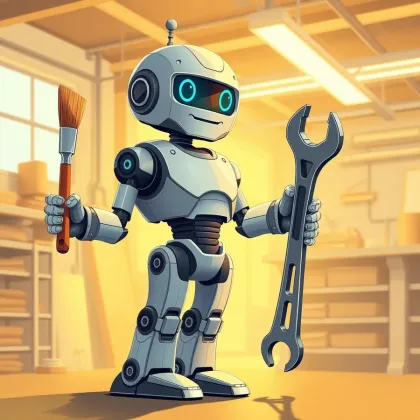
versatile adjective
Pronunciation: /VER-suh-til/
Able to adapt or be used for many different things.
- A versatile chef can cook many different types of cuisine.
- The versatile actor played many different roles in the movie.
- The versatile software can handle both design and coding.
Common phrases highly versatileversatile toolversatile skill
Word family versatilityversatile
How to use it: Use this when describing something (a person, machine, or object) that can perform many different functions or adapt to various situations.
- Similar
- adaptable, all-purpose, multifaceted
- Opposite
- specialised, limited, narrow
- Often used in
- technology reviews, job descriptions, product descriptions

indispensable adjective
Pronunciation: /in-dis-PEN-suh-bul/
Absolutely necessary; something you cannot do without.
- In the modern office, a good computer is an indispensable tool.
- Water is an indispensable part of human life.
- He realised his best friend was an indispensable part of his support system.
Common phrases absolutely indispensableindispensable resourceindispensable skill
Word family indispensabilityindispensable
How to use it: Use this when something has become so important that its absence would cause major problems.
- Similar
- essential, vital, crucial
- Opposite
- optional, unnecessary, superfluous
- Often used in
- business strategy, personal development, technology adoption

groundbreaking adjective
Pronunciation: /ground-BREAK-ing/
Introducing something completely new and innovative.
- The new AI model is considered a groundbreaking achievement in computer science.
- This research represents a groundbreaking discovery in medicine.
- The company launched a groundbreaking new product line.
Common phrases groundbreaking technologygroundbreaking discoverygroundbreaking research
Word family groundbreakgroundbreaking
How to use it: Use this when describing something that changes the way we think about a topic or introduces a major innovation.
- Similar
- revolutionary, innovative, pioneering
- Opposite
- conventional, traditional, routine
- Often used in
- scientific journals, business pitches, tech news

efficiency noun
Pronunciation: /uh-FISH-en-see/
The ability to achieve maximum productivity with minimum wasted effort.
- Using AI can greatly increase the efficiency of a marketing team.
- We need to improve the efficiency of our supply chain.
- The new software promises better energy efficiency.
Common phrases improve efficiencyincrease efficiencyoperational efficiency
Word family efficientefficiently
How to use it: Use this when discussing how well a process or system works, especially in terms of time or resources.
- Similar
- effectiveness, productivity, streamlining
- Opposite
- waste, inefficiency, slowness
- Often used in
- business management, engineering, process improvement
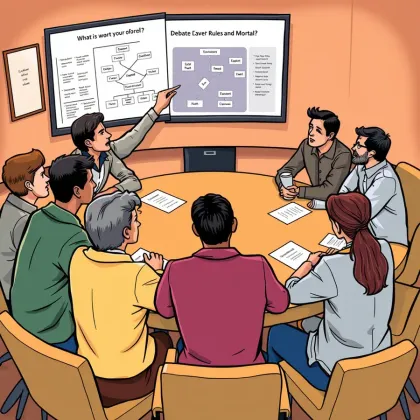
ethical adjective
Pronunciation: /ETH-i-kul/
Relating to moral principles and the right way of behaving.
- We must consider the ethical implications of using AI in hiring.
- The company has an ethical code of conduct for its employees.
- It is an ethical dilemma to share private data.
Common phrases ethical concernsethical dilemmaethical guidelines
Word family ethicsethically
How to use it: Use this when discussing right and wrong, fairness, or moral responsibilities in a situation.
- Similar
- moral, principled, righteous
- Opposite
- unethical, immoral, amoral
- Often used in
- philosophy, law, corporate governance
3 Reading
Read this short article about the rapid growth of AI assistants. Don't worry about understanding every single word; just focus on the main ideas and how the technology is changing our lives.
In class, you read the text aloud. I help with pronunciation and natural rhythm, and then we talk about it.
The AI Revolution: A New Era of Assistance
AI assistants, like Muse and Grokbot, are becoming a huge part of modern life. These tools are incredibly versatile, meaning they can handle many different kinds of tasks, from writing emails to brainstorming creative ideas. Many people are starting to see them as truly indispensable in their daily routines.
The speed and accuracy of these programs are truly groundbreaking. They can process massive amounts of data in seconds, something that would take a human hours. This boost in efficiency is changing how businesses operate and how students study.
However, this rapid growth brings up some important questions. For example, what about the ethical implications of relying on AI? If we let machines make all our decisions, what happens to human skills? These are big debates happening right now.
Some supporters argue that AI is simply a powerful tool that helps us achieve more. They believe that by automating boring tasks, we free up time for more creative and meaningful work. They see it as a massive step forward for humanity.
Others worry about the future. They fear that over-reliance on AI could lead to job displacement or even a loss of critical thinking. Finding a balance between using these powerful tools and maintaining human judgment is the biggest challenge we face today.
4 Comprehension
We check what you understood from the reading. You explain your answer in your own words. (The answers are under each question.)
-
What does 'versatile' mean?
Show answer
B) Able to adapt or be used for many different things
Versatile means something can perform many different functions or adapt to various situations.
-
Which word describes something that is absolutely necessary?
Show answer
C) Indispensable
Indispensable means you cannot do without it; it is absolutely necessary.
-
If a new technology is 'groundbreaking', it means it is:
Show answer
C) Introducing something completely new and innovative
Groundbreaking refers to something that starts a new era or makes a major, innovative discovery.
-
The main goal of improving 'efficiency' is to:
Show answer
C) Achieve maximum productivity with minimum wasted effort
Efficiency is about doing things well and quickly, using the least amount of effort or resources possible.
-
When discussing AI, 'ethical' concerns relate to:
Show answer
C) Moral principles and the right way of behaving
Ethical concerns deal with the moral right or wrong of an action or system.
5 Idioms and phrasal verbs
You find each expression in the reading and guess what it means. Then we practise using it to talk about your own life and work.
free up
From the readingThey believe that by automating boring tasks, we free up time for more creative and meaningful work.
What do you think it means? Show meaning
to make time, money or space available by removing something else (similar: make available)
Example: Quitting social media freed up hours of my week.
- Separable: you can say 'free up time' or 'free time up'. ✓ free up some time ✗ free some time to up
- Common with time, money and space: 'free up cash', 'free up a room'.
Your turn: If AI freed up two hours of your day, what would you spend them on?
bring up
From the readingHowever, this rapid growth brings up some important questions.
What do you think it means? Show meaning
to start talking about a topic (similar: mention)
Example: Don't bring up politics at dinner with my uncle, please!
- Separable: 'bring it up', not 'bring up it'. ✓ bring it up ✗ bring up it
- Don't confuse with 'grow up' — 'bring up' a child means raise one.
Your turn: What topic do your friends always bring up that you're a bit tired of talking about?
a double-edged sword
What do you think it means? Show meaning
something good that also has bad effects (similar: good and bad at the same time)
Example: Working from home is a double-edged sword — freedom, but also loneliness.
- Picture a sword that cuts both ways: it can help you or hurt you.
- Very common in news and debate: 'Social media is a double-edged sword.'
Your turn: Why is AI a double-edged sword for you? What's the good side and the bad side?
keep up with
What do you think it means? Show meaning
to stay at the same level or speed as something changing (similar: stay level with)
Example: It's hard to keep up with all the new apps coming out.
- Not separable: 'keep up with it', never 'keep it up with' for this meaning.
- Also used for people: 'I can't keep up with my younger coworkers.'
Your turn: Do you find it easy or hard to keep up with new technology? Give me an example.
6 Sentence frames
Let's practice the language needed to talk about technology, pros, and cons.
We start with the simple frame and step up to longer, more natural sentences. You fill the gaps with your own ideas, and I help you sound more fluent.
Comparing Views
Grammar Modal verbs (should, could, might)Conjunction 'but'
-
Simple
Some people think AI is good, but I think it is bad because reason.
Use this simple structure to state a clear opinion and a reason.
Example answers
- Some people think AI is fast, but I think it is not creative.
- Some people say AI helps students, but I think it makes them lazy.
- Some people think AI is fun, but I think it is too expensive.
-
Stronger
While some people say positive point, I believe that negative point is a bigger concern.
Use 'While' to introduce a contrasting idea before stating your own view.
Example answers
- While some people say AI saves time, I believe that it might reduce human job opportunities.
- While some people say AI is helpful for writing, I believe that it lacks true human emotion.
- While some people say AI is fun to use, I believe that it is not ethical to rely on it completely.
Giving Pros and Cons
Grammar Phrasal verbs (e.g., 'bring about', 'cut down on')Conditional clauses (If/Unless)
-
Simple
AI is good because pro, but it is bad because con.
A simple list of advantages and disadvantages.
Example answers
- AI is good because it is fast, but it is bad because it is expensive.
- AI is good for writing, but it is bad for creativity.
- AI is good for math, but it is bad for learning.
-
Stronger
If we use AI for task, it will bring about positive result, but we must watch out for negative result.
Using 'If' and 'bring about' to discuss cause and effect.
Example answers
- If we use AI for research, it will bring about faster results, but we must watch out for errors.
- If we use AI to automate tasks, it will cut down on manual labour, but we must watch out for job loss.
- If we use AI for design, it will bring about new ideas, but we must watch out for ethical issues.
Imagining Situations
Grammar Second Conditional (If I had..., I would...)Future perfect continuous (will have been doing)
-
Simple
If I had an AI assistant, I would use it to task.
Simple hypothetical situation.
Example answers
- If I had an AI assistant, I would use it to write my emails faster.
- If I had an AI assistant, I would use it to plan my travel.
- If I had an AI assistant, I would use it to learn a new language.
-
Stronger
If AI could solve problem, it would change area completely.
Speculating on a large-scale impact.
Example answers
- If AI could solve climate change, it would change the environment completely.
- If AI could cure diseases, it would change human life forever.
- If AI could manage all our finances, it would change how we work.
7 Fill in the blanks
A quick practice with the new words: you choose the right word for each gap.
Word box versatileindispensablegroundbreakingefficiencyethical
AI assistants are becoming very popular because they are so 1. They can help with many tasks, making our work much more 2. However, we must be careful. Some people worry about the 3 side of these powerful tools. Still, many people find them 4 in their daily lives. This technology is truly 5 and is changing the way we live.
Show answers
- versatile
- efficiency
- ethical
- indispensable
- groundbreaking
8 Sentence unscramble
You put the words in order and say the sentence out loud.
-
thenewAIgroundbreakingtechnologyis
Show answer
The new AI is groundbreaking technology.
-
theweimplicationsmustconsiderethical
Show answer
We must consider the ethical implications.
-
istoolaversatileit
Show answer
It is a versatile tool.
9 Discussion
The main speaking part of the lesson. We discuss each question together, and you use the new words and sentence frames. I ask follow-up questions and correct your mistakes as we go.
-

Imagine you are trying to manage a busy project, like planning a big trip or organising a complex event. You could use an AI assistant to handle the boring parts, like scheduling or finding flights. But then, you have to make the big decisions, like choosing the perfect restaurant or deciding on the overall theme. Where do you draw the line between letting AI help and making the final choice yourself?
If you used AI to plan your next big trip, what decisions would you let the AI make, and which ones would you keep completely for yourself? Why?
-

Many people believe that AI will eventually take over many jobs, especially those that involve repetitive tasks like data entry or customer service. However, other experts argue that AI will actually create new, more creative jobs that we haven't even thought of yet. It's a big debate about whether AI is a threat or an opportunity for the future of work.
Do you think AI will create more jobs or destroy more jobs in the next ten years? What kind of skills do you think humans will need to stay relevant in an AI-driven world?
-

Think about the creative fields, like writing, painting, or music. AI can now generate art and stories that are very impressive, which some people find amazing. But others worry that if AI can create something beautiful, what is the value of human effort and talent? Does AI take away the meaning of human creativity?
Do you think AI can ever truly be creative, or is it just copying human ideas? How does AI change the way we value human talent today?
-

Imagine a small business owner who is struggling to keep up with social media, customer service, and inventory management all at once. An AI assistant could handle all these tasks, giving the owner more time to focus on the quality of their product and building relationships with customers. This sounds like a huge boost to their business.
If you owned a small business, would you use an AI assistant to handle the daily operations? What specific tasks would you delegate to AI to improve your business's efficiency?
-

When we use AI, we are essentially giving it access to huge amounts of our personal data—what we search for, what we buy, and even what we talk about. This raises serious questions about privacy. If AI knows everything about us, who is in control of that information? Is it safe to let these powerful systems monitor our lives?
How comfortable are you with AI assistants knowing a lot about your personal life? What rules or guidelines do you think should be in place to protect our privacy?
10 Quiz
A short review at the end of the lesson to check what you remember.
-
Which word means 'the ability to achieve maximum productivity with minimum wasted effort'?
Show answer
C) Efficiency
Efficiency refers to how well a process works without wasting time or resources.
-
True or False: An 'indispensable' tool is one that is optional and can be easily replaced.
Show answer
False
Indispensable means absolutely necessary; you cannot do without it.
-
If a new AI model is 'groundbreaking', it means:
Show answer
C) It is revolutionary and innovative.
Groundbreaking describes something that introduces a major, innovative advancement.
-
What is the main focus of 'ethical' concerns when discussing AI?
Show answer
C) The moral right or wrong of its use.
Ethical concerns relate to moral principles and the right way of behaving.
-
A 'versatile' person is someone who is:
Show answer
B) Able to adapt or be used for many different things.
Versatile means having the ability to adapt or perform many different functions.
-
If something is 'a double-edged sword', what does that mean?
Show answer
It has both good and bad sides
A double-edged sword cuts both ways: something helpful that also causes problems.
Lesson created with PlanwiseESL.
Useful for: English for IT and tech professionals · English conversation practice
More sample lessons
Thinking in English: Ditching the Mental Translator
Stop translating in your head when you speak English. Learn why it happens and how English becomes a reflex. A C1 speaking lesson I teach live.
See the lesson → Level B2Mind in Motion: The Mental Benefits of Exercise
Learn words to talk about exercise and mental health, like sedentary and endorphins, and use them in real discussion. A B2 lesson I teach one-to-one.
See the lesson → Level B2At the Movies: Talking About Films
Learn words to talk about films, like blockbuster, plot twist and underrated, and use them to share your opinions. A B2 lesson I teach one-to-one.
See the lesson →All sample lessons: Business Small Talk in English · How to Disagree Diplomatically in English · Talk About the Pros and Cons of International Aid in English · Words to Describe Inequality in English · Vocabulary to Talk About Money in English · Vocabulary to Talk About the Environment in English · Words to Describe a Leader in English · Explaining a Technical Problem in English · Handling Price Objections in English · How to Keep a Conversation Going in English · Patient Handover English for Doctors and Nurses · Presenting Monthly Results in English · Understanding Contracts in Plain English · How to Answer Questions After a Presentation in English · How to Talk About Your Career Goals and Leadership in an Interview · Vocabulary to Talk About Geopolitics in English · What British Colleagues Really Mean: Polite, Indirect English at Work