Vocabulary to Talk About the Environment in English
Lesson: Our Fragile Planet: Understanding the Environmental Crisis
This is a lesson I teach to learners who want to discuss climate change and the environment in English, at work or with friends. Together we learn words like sustainability, emissions and mitigation, and practise giving clear opinions on a big topic.
In short: the key language in this lesson
Useful phrases
- Expressing concern and explaining causes: The degradation of ___ has increased significantly due to ___, which means that ___.
- Comparing perspectives and evaluating solutions: While some argue that ___, others believe that ___ is a more effective way to ___.
- Proposing solutions and expressing hypothetical outcomes: If governments invested more in ___, emissions would fall significantly, and biodiversity would have a better chance of ___.
Key words
- sustainability:
- The ability to continue something without damaging the environment or using up resources.
- biodiversity:
- The wide variety of different plants, animals, and other living things in a place.
- emissions:
- Gases or other substances released into the air, especially harmful ones from burning fuel.
- degradation:
- The process by which something, especially land or the environment, becomes worse or damaged.
- mitigation:
- Actions taken to reduce the severity or harmful effects of something, especially climate change.
This lesson is designed to be taught live, not studied alone. I create every lesson and teach it myself, one-to-one. In class, I guide you through each part, ask follow-up questions, correct your mistakes and help you say more.
Here you can see exactly what a lesson with me looks like. For my students, I build lessons like this around their own job and goals.
1 Warm-up
Students look at five environmental images and predict which vocabulary words might be used to describe them. Then they discuss their personal connection to environmental issues.
We start with a relaxed chat. I ask these questions, you answer freely, and I note useful language for later.
- How often do you think about your impact on the environment in daily life?
- What environmental problem worries you most — pollution, climate change, deforestation, or something else?
- Do you think individuals or governments are more responsible for protecting the environment?
- Have you ever changed a habit to be more environmentally friendly? What did you do?
- What does the word 'sustainability' mean to you personally?
2 Key vocabulary
Before the reading, we go through 5 key words together: how to say them, what they mean, and how people really use them.
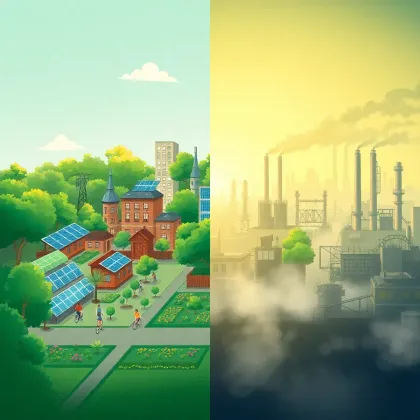
sustainability noun
Pronunciation: /sus-TAYN-uh-BIL-ih-tee/
The ability to continue something without damaging the environment or using up resources.
- The company invested heavily in sustainability by switching to 100% renewable energy.
- The university published a sustainability report outlining its carbon reduction targets.
- We need to talk about sustainability — my city is running out of clean water.
- I try to think about sustainability when I shop, choosing products with less packaging.
Common phrases environmental sustainabilitylong-term sustainabilitysustainability goals
Word family sustainable (adj)sustainably (adv)sustain (verb)unsustainable (adj)
How to use it: Used in academic, political, and business contexts. Often collocates with 'environmental', 'economic', or 'social'. The adjective 'sustainable' is extremely common in news and policy language.
- Similar
- environmental responsibility, ecological balance, long-term viability
- Opposite
- unsustainability, exploitation, short-termism
- Often used in
- environmental policy, business strategy, urban planning, agriculture
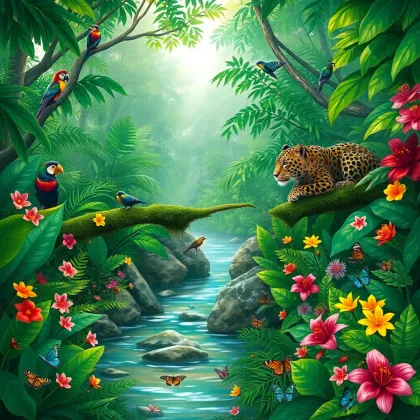
biodiversity noun
Pronunciation: /by-oh-dy-VER-sih-tee/
The wide variety of different plants, animals, and other living things in a place.
- The Amazon rainforest contains extraordinary biodiversity, with millions of species yet to be discovered.
- Scientists measure biodiversity by counting the number of species in a given area.
- The coral reef's biodiversity has collapsed due to rising ocean temperatures.
- I never realised how much biodiversity existed in my local park until I joined a nature walk.
Common phrases protect biodiversityloss of biodiversityrich in biodiversity
Word family biodiverse (adj)biological (adj)diversity (noun)diverse (adj)
How to use it: Primarily used in scientific, environmental, and policy contexts. Can be modified by adjectives like 'rich', 'remarkable', or 'threatened'. Often discussed alongside habitat loss and extinction.
- Similar
- species variety, ecological richness, biological diversity
- Opposite
- monoculture, species loss, ecological uniformity
- Often used in
- conservation biology, environmental policy, agriculture, marine science
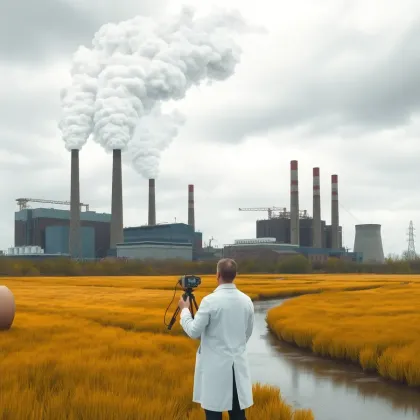
emissions noun (plural)
Pronunciation: /ee-MISH-unz/
Gases or other substances released into the air, especially harmful ones from burning fuel.
- The government pledged to cut carbon emissions by 50% before 2035.
- Electric vehicles produce zero direct emissions, though their batteries require significant energy to manufacture.
- Emissions from aviation are a growing concern for climate scientists.
- I checked my household emissions using an online calculator and was shocked by the result.
Common phrases carbon emissionsreduce emissionsgreenhouse gas emissions
Word family emit (verb)emission (singular noun)emitter (noun)
How to use it: Almost always used in the plural in environmental contexts. 'Carbon emissions' and 'greenhouse gas emissions' are the most frequent collocations. Also used in industrial and transport contexts.
- Similar
- pollutants, discharge, exhaust fumes, greenhouse gases
- Opposite
- absorption, carbon capture, sequestration
- Often used in
- climate policy, transport, industry, energy production
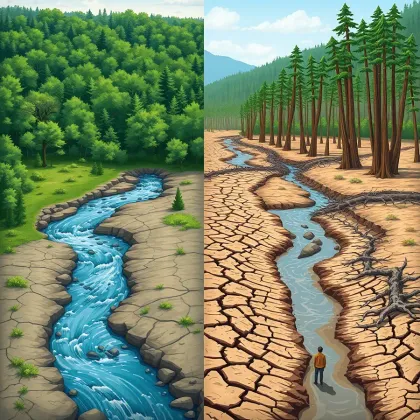
degradation noun
Pronunciation: /deg-ruh-DAY-shun/
The process by which something, especially land or the environment, becomes worse or damaged.
- Soil degradation caused by overfarming has made large areas of land impossible to cultivate.
- The degradation of the river ecosystem was directly linked to industrial waste dumping.
- Environmental degradation in the region has forced thousands of people to migrate.
- I was shocked to see the degradation of the beach I visited as a child — it was unrecognisable.
Common phrases environmental degradationland degradationsoil degradation
Word family degrade (verb)degraded (adj)degrading (adj)biodegradable (adj)
How to use it: Used in environmental, social, and scientific contexts. In environmental discussions, it almost always collocates with 'land', 'soil', 'habitat', or 'environmental'. Avoid confusing with 'biodegradable', which is a positive term.
- Similar
- deterioration, decline, damage, destruction
- Opposite
- restoration, regeneration, recovery, rehabilitation
- Often used in
- environmental science, agriculture, conservation, urban development
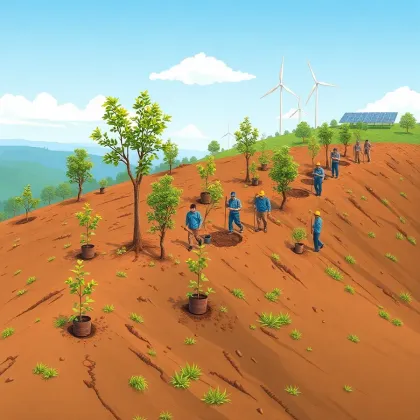
mitigation noun
Pronunciation: /mit-ih-GAY-shun/
Actions taken to reduce the severity or harmful effects of something, especially climate change.
- Planting millions of trees is one mitigation strategy that countries are using to absorb carbon dioxide.
- The report outlined several mitigation measures to reduce flood risk in coastal cities.
- Climate mitigation requires both individual behaviour change and large-scale policy reform.
- Our city council approved a mitigation plan to reduce the urban heat island effect.
Common phrases climate mitigationmitigation strategymitigation measures
Word family mitigate (verb)mitigating (adj)mitigatory (adj)
How to use it: Common in environmental policy, legal, and risk management contexts. In climate discussions, it is often contrasted with 'adaptation' — mitigation reduces the cause, while adaptation adjusts to the effects. A useful distinction for B2 students.
- Similar
- reduction, alleviation, prevention, risk reduction
- Opposite
- aggravation, escalation, neglect, inaction
- Often used in
- climate policy, disaster management, environmental law, urban planning
3 Reading
Read this article about the current state of the global environment. As you read, notice how the five key words are used in context.
In class, you read the text aloud. I help with pronunciation and natural rhythm, and then we talk about it.
A Planet Under Pressure
The concept of sustainability has moved from academic journals to everyday conversation in recent decades. At its core, sustainability means meeting today's needs without compromising the ability of future generations to meet theirs. Governments, corporations, and individuals are increasingly aware that our current patterns of consumption are simply not sustainable. Without a fundamental shift in how we produce energy, grow food, and manage waste, the long-term health of our planet remains deeply uncertain.
One of the most alarming consequences of human activity is the rapid degradation of natural ecosystems. Degradation occurs when land, water, or air quality deteriorates to the point where it can no longer support healthy life. Deforestation, industrial farming, and urban sprawl have all contributed to widespread environmental degradation across every continent. Scientists warn that once degradation reaches a critical threshold, recovery becomes extraordinarily difficult and expensive, making prevention far more prudent than cure.
Closely linked to ecosystem degradation is the devastating loss of biodiversity. Biodiversity refers to the enormous variety of plant and animal species that share our planet, and it is declining at an unprecedented rate. Healthy biodiversity acts as a kind of natural insurance policy — diverse ecosystems are more resilient to disease, climate shifts, and environmental shocks. When biodiversity collapses, entire food chains can unravel, with consequences that ripple far beyond the affected region.
A major driver of both degradation and biodiversity loss is the unchecked rise in greenhouse gas emissions. Emissions from burning fossil fuels, industrial agriculture, and deforestation are warming the planet at a rate that natural systems struggle to absorb. Reducing emissions has become one of the defining political and economic challenges of our era. Some nations have made bold commitments to reach net-zero emissions by mid-century, though critics argue that these pledges lack the urgency and funding required to be meaningful.
Fortunately, the science of mitigation offers genuine reasons for optimism. Mitigation strategies — actions designed to reduce or prevent the worst effects of climate change — range from large-scale renewable energy projects to community-level reforestation programmes. Effective mitigation requires both technological innovation and intentional policy change. While some argue that mitigation alone cannot reverse existing damage, others believe that ambitious mitigation efforts, combined with lifestyle changes and international cooperation, can still secure a liveable future for our planet.
4 Comprehension
We check what you understood from the reading. You explain your answer in your own words. (The answers are under each question.)
-
Which sentence uses 'sustainability' correctly?
Show answer
Sustainability means managing resources so they remain available for future generations.
'Sustainability' refers to using resources in a way that does not damage the environment or deplete them for the future. The other options use the word in unrelated or incorrect contexts.
-
In which situation would you most likely use the word 'biodiversity'?
Show answer
When talking about the variety of plant and animal species in an ecosystem.
'Biodiversity' specifically refers to the variety of living organisms — plants, animals, fungi, and microorganisms — in a particular habitat or on Earth as a whole.
-
What does 'emissions' mean in the context of the environment?
Show answer
Harmful gases released into the atmosphere, especially from burning fuel.
'Emissions' in environmental contexts refers to gases — particularly carbon dioxide and methane — that are released into the atmosphere through human activities like burning fossil fuels.
-
A river that was once clean is now polluted and unable to support fish. Which word best describes what has happened to it?
Show answer
Degradation
'Degradation' describes the process by which something deteriorates or becomes damaged. Environmental degradation means the environment has become worse and can no longer support healthy life.
-
Which of the following is an example of climate 'mitigation'?
Show answer
Installing solar panels to reduce dependence on fossil fuels.
Mitigation means reducing the causes of climate change. Installing solar panels reduces the burning of fossil fuels and therefore lowers emissions. The other options describe adaptation — adjusting to the effects of climate change rather than reducing its causes.
5 Sentence frames
Use these frames to practise expressing your ideas about environmental issues clearly and confidently.
We start with the simple frame and step up to longer, more natural sentences. You fill the gaps with your own ideas, and I help you sound more fluent.
Expressing concern and explaining causes
Grammar present perfect for recent changescausal connectors: due to, as a result of, because of
-
Simple
___ is a big problem because ___.
Use a simple subject and give one reason.
Example answers
- Air pollution is a big problem because it harms people's health.
- Deforestation is a big problem because animals lose their homes.
- Plastic waste is a big problem because it ends up in the ocean.
-
Stronger
The degradation of ___ has increased significantly due to ___, which means that ___.
Use the present perfect to show ongoing change and add a consequence.
Example answers
- The degradation of coral reefs has increased significantly due to rising ocean temperatures, which means that entire marine ecosystems are at risk.
- The degradation of rainforests has increased significantly due to illegal logging, which means that biodiversity is being lost at an alarming rate.
- The degradation of farmland has increased significantly due to overuse of chemicals, which means that food security is becoming a serious concern.
Comparing perspectives and evaluating solutions
Grammar concessive clauses: while, although, even thoughmodal verbs for evaluation: could, should, might
-
Simple
Some people think ___, but I think ___.
Express a contrasting opinion simply.
Example answers
- Some people think recycling is enough, but I think we need to produce less waste.
- Some people think electric cars solve pollution, but I think public transport is better.
- Some people think governments should act, but I think individuals must change too.
-
Stronger
While some argue that ___, others believe that ___ is a more effective way to ___.
Present two contrasting views and evaluate them.
Example answers
- While some argue that individual lifestyle changes are enough, others believe that government regulation is a more effective way to reduce emissions.
- While some argue that nuclear energy is dangerous, others believe that it is a more effective way to achieve sustainability than solar power alone.
- While some argue that planting trees solves deforestation, others believe that protecting existing forests is a more effective way to preserve biodiversity.
Proposing solutions and expressing hypothetical outcomes
Grammar second conditional for hypothetical situationspurpose clauses: in order to, so that
-
Simple
If we ___, the environment would ___.
Use the second conditional to describe a hypothetical improvement.
Example answers
- If we used less plastic, the ocean would be cleaner.
- If we planted more trees, the air would be healthier.
- If we drove less, carbon emissions would decrease.
-
Stronger
If governments invested more in ___, emissions would fall significantly, and biodiversity would have a better chance of ___.
Link a policy action to two environmental outcomes.
Example answers
- If governments invested more in renewable energy, emissions would fall significantly, and biodiversity would have a better chance of recovering in areas affected by pollution.
- If governments invested more in public transport, emissions would fall significantly, and biodiversity would have a better chance of flourishing in urban green spaces.
- If governments invested more in sustainable agriculture, emissions would fall significantly, and biodiversity would have a better chance of surviving in rural ecosystems.
6 Fill in the blanks
A quick practice with the new words: you choose the right word for each gap.
Word box sustainabilitybiodiversityemissionsdegradationmitigation
The world's oceans are facing a crisis of 1 that scientists describe as unprecedented in modern history. Overfishing, plastic pollution, and rising water temperatures have combined to devastate marine life, causing a catastrophic loss of 2 that may take centuries to reverse. Researchers argue that the root cause is a failure of 3 — for decades, industries have extracted resources from the sea without any regard for long-term consequences. Meanwhile, 4 from shipping and coastal industry continue to acidify the water, making it increasingly hostile to coral and shellfish. Environmental groups are now calling for urgent 5 action, including international fishing bans, stricter pollution controls, and the creation of large marine protected areas.
Show answers
- degradation
- biodiversity
- sustainability
- emissions
- mitigation
7 Sentence unscramble
You put the words in order and say the sentence out loud.
-
islossrainforestsalarmingacceleratingbiodiversityrateanofTheinattropical
Show answer
The loss of biodiversity in tropical rainforests is accelerating at an alarming rate.
-
effectivedegradationmitigationofworsencoastalwilltocontinue,Withoutstrategiestheecosystems
Show answer
Without effective mitigation strategies, the degradation of coastal ecosystems will continue to worsen.
-
iscarbonforachievinglong-termenvironmentalessentialemissionsReducingsustainability
Show answer
Reducing carbon emissions is essential for achieving long-term environmental sustainability.
8 Discussion
The main speaking part of the lesson. We discuss each question together, and you use the new words and sentence frames. I ask follow-up questions and correct your mistakes as we go.
-
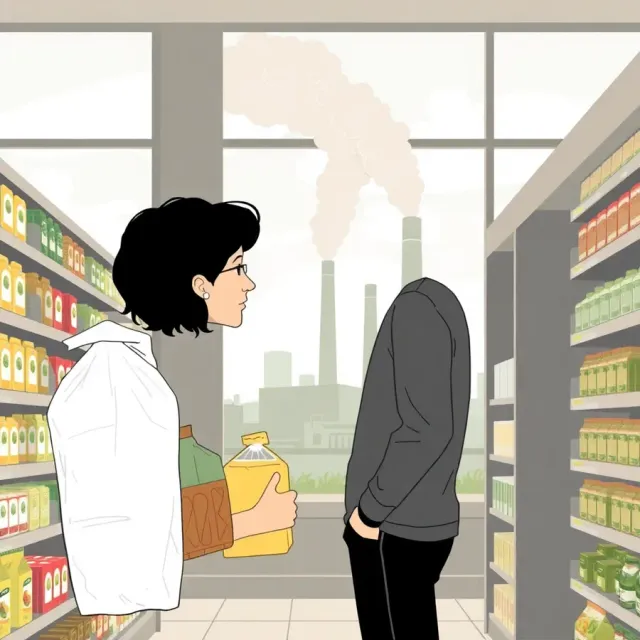
Many scientists argue that individual lifestyle changes — such as eating less meat, flying less, and buying fewer products — are essential for reducing environmental damage. However, others point out that just 100 companies are responsible for 71% of global emissions, suggesting that corporate and government action matters far more than personal choices. This debate raises important questions about where responsibility truly lies and whether individuals should feel guilty for systemic problems.
Do you think individuals have a moral responsibility to change their lifestyle for the environment, or is it unfair to place that burden on ordinary people when corporations produce the majority of emissions?
-
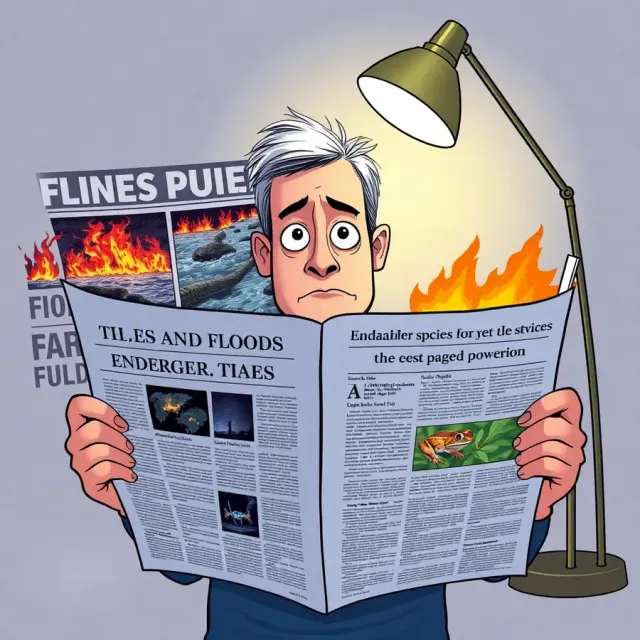
Biodiversity loss is often described as the 'silent crisis' because it receives far less media attention than climate change, despite being equally serious. Scientists estimate that species are currently going extinct at a rate 1,000 times higher than the natural background rate. Many of these species have not even been discovered yet. The loss of biodiversity can destabilise entire ecosystems, affecting food production, water quality, and human health in ways that are difficult to predict.
Why do you think biodiversity loss receives less public attention than climate change, and what could be done to make people care more about it?
-
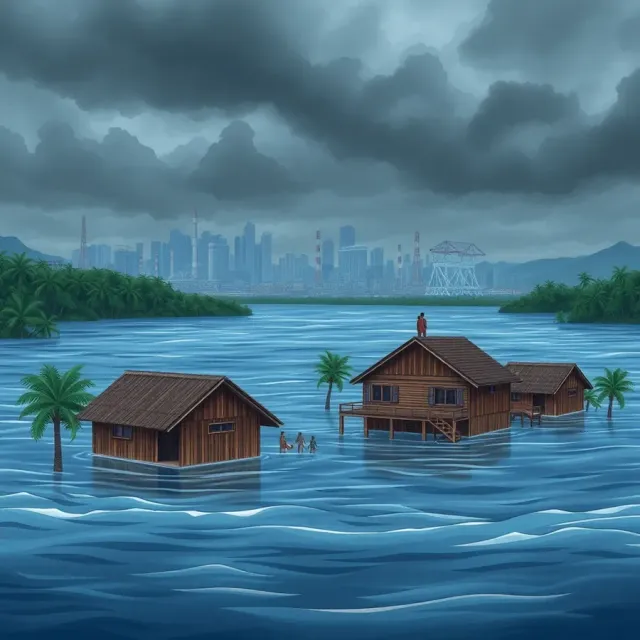
Wealthier nations have historically produced the vast majority of greenhouse gas emissions, yet it is often poorer countries — particularly small island nations and sub-Saharan African countries — that suffer the most severe consequences of climate change. This raises profound questions of global justice. Some argue that rich nations have a moral obligation to fund climate mitigation and adaptation in developing countries, while others believe that each nation must take responsibility for its own environmental future.
Is it fair that countries which contributed least to climate change are suffering the most from its effects? What obligations, if any, do wealthier nations have towards them?
-
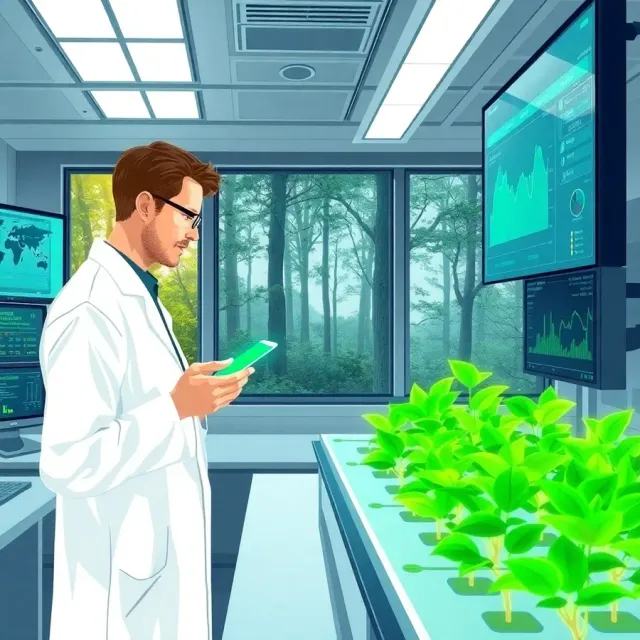
Technological optimists argue that innovation will solve the environmental crisis — pointing to advances in solar energy, electric vehicles, carbon capture technology, and lab-grown meat as evidence that human ingenuity can overcome environmental degradation without requiring major lifestyle sacrifices. Sceptics, however, warn that relying on future technology is a form of wishful thinking that delays the urgent action needed today. They argue that a more intentional and frugal approach to consumption is the only realistic path forward.
Do you believe that technology alone can solve the environmental crisis, or do people need to fundamentally change how they live? What evidence supports your view?
-
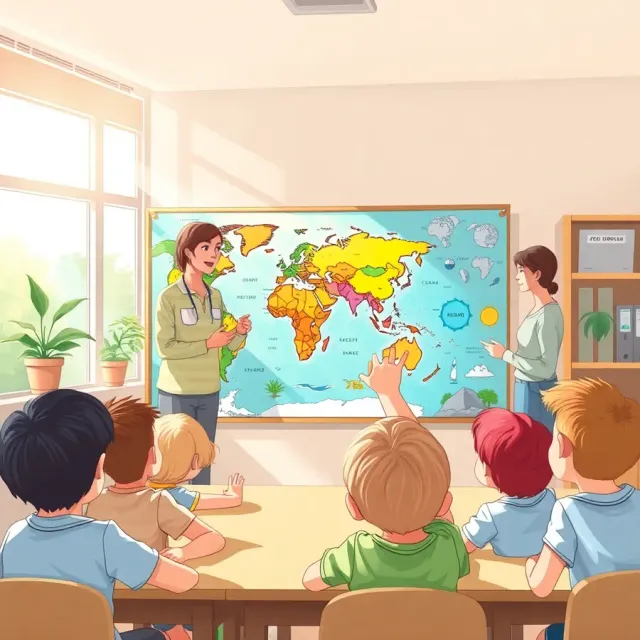
Environmental education is increasingly being incorporated into school curricula around the world, with the aim of raising a generation that is more aware of sustainability issues and more motivated to act. Some educators argue that teaching children about environmental degradation and emissions from an early age empowers them to make better choices and advocate for change. Critics, however, worry that exposing young children to frightening environmental statistics can cause anxiety and a sense of helplessness rather than motivation.
At what age should children start learning about serious environmental problems, and how should teachers balance honesty about the crisis with maintaining a sense of hope and agency?
9 Quiz
A short review at the end of the lesson to check what you remember.
-
Which of the following best defines 'mitigation' in an environmental context?
Show answer
Taking actions to reduce the causes or severity of environmental damage.
Mitigation means reducing or preventing harm. In climate contexts, it refers to actions that reduce the causes of climate change, such as cutting emissions or planting forests. It is different from adaptation, which means adjusting to changes that have already occurred.
-
True or false: 'Biodiversity' refers only to the number of animal species in a habitat.
Show answer
False
Biodiversity refers to the variety of ALL living organisms in a habitat or on Earth, including plants, animals, fungi, bacteria, and other microorganisms. It is not limited to animals.
-
According to the reading passage, what happens when biodiversity collapses?
Show answer
Entire food chains can unravel, with far-reaching consequences.
The reading states that 'when biodiversity collapses, entire food chains can unravel, with consequences that ripple far beyond the affected region.' This illustrates the interconnected nature of ecosystems.
-
Which word is the opposite of 'degradation' when talking about the environment?
Show answer
Restoration
Degradation means the process of becoming worse or more damaged. Its opposite is restoration — the process of returning something to a better or original condition. While sustainability and mitigation are related positive concepts, they are not direct antonyms of degradation.
-
True or false: The reading passage suggests that mitigation strategies offer no reason for optimism about the future of the planet.
Show answer
False
The final paragraph of the reading states that 'the science of mitigation offers genuine reasons for optimism.' The passage presents mitigation as a source of hope, not despair, while acknowledging that it requires both technological and policy change.
Lesson created with PlanwiseESL.
This lesson is part of my everyday English conversation course for B2 learners.
Useful for: English conversation practice
More sample lessons
The Art of Leadership: What Makes a Great Boss?
Learn words to describe a good leader, like decisive, approachable and empathetic, and use them to talk about bosses and teams. A B2 lesson I teach live.
See the lesson → Level B2Keeping the Conversation Going
A B2 English lesson on keeping a conversation going, as I teach it one-to-one: icebreakers, follow-up questions and rapport, with a reading and discussion.
See the lesson → Level B2The Great Game: How Countries Compete for Power
Learn words to talk about geopolitics in English: alliance, sanctions, sovereignty, superpower and more. A B2 discussion lesson I teach live, one-to-one.
See the lesson →All sample lessons: Explaining a Technical Problem in English · Handling Price Objections in English · Patient Handover English for Doctors and Nurses · Presenting Monthly Results in English · Understanding Contracts in Plain English · How to Answer Questions After a Presentation in English · How to Talk About Your Career Goals and Leadership in an Interview · What British Colleagues Really Mean: Polite, Indirect English at Work · Vocabulary to Talk About AI in English · Business Small Talk in English · How to Disagree Diplomatically in English · Talk About the Pros and Cons of International Aid in English · How to Stop Translating in Your Head When You Speak English · Words to Describe Inequality in English · Health and Fitness Vocabulary in English · Vocabulary to Talk About Films in English · Vocabulary to Talk About Money in English