Handling Price Objections in English
Lesson: Handling Price Objections: The Art of the Ask
This is an advanced (C1) lesson I teach to sales professionals who hear "It's too expensive" from English-speaking clients. Together we learn phrases like sweeten the deal and practise answering price objections with confidence.
In short: the key language in this lesson
Useful phrases
- Conceding a point while defending your position: While I concede that ___, the real issue is ___.
- Justifying a price with evidence: If you compare it to ___, you'll see that ___.
- Making and reacting to counter-offers: I can't move on the price, but I could ___ if that ___.
Key words
- balk at:
- to suddenly refuse to do or accept something because it seems too difficult or too much
- concede:
- to admit something is true, often unwillingly, or to give up a point in an argument
- leverage:
- the power or advantage you use to get what you want in a deal or situation
- sticker shock:
- the shock or unpleasant surprise you feel when you see that something costs much more than expected
- sweeten the deal:
- to add something extra, like a bonus or benefit, to make an offer more attractive
Idioms and phrasal verbs
- stop someone cold:
- to suddenly make someone unable to continue or respond
- fold under pressure:
- to give up or give in when things get difficult
- slash prices:
- to reduce prices or costs by a large amount, suddenly
- let someone down:
- to disappoint someone by failing to do what you promised
This lesson is designed to be taught live, not studied alone. I create every lesson and teach it myself, one-to-one. In class, I guide you through each part, ask follow-up questions, correct your mistakes and help you say more.
Here you can see exactly what a lesson with me looks like. For my students, I build lessons like this around their own job and goals.
1 Warm-up
Think about the last time something felt overpriced to you — a product, a service, maybe a restaurant bill. We'll talk about why we push back on prices and what it takes to change our minds.
We start with a relaxed chat. I ask these questions, you answer freely, and I note useful language for later.
- When was the last time you looked at a price and thought, no way? What was it?
- Do you ever argue about price before buying something, or do you just walk away?
- Has a salesperson ever managed to convince you that something expensive was worth it? How did they do it?
- Do you think haggling is normal where you live, or is it a bit awkward?
- What matters more to you when something's pricey: the quality, the brand, or the feeling that you're getting a fair deal?
2 Key vocabulary
Before the reading, we go through 5 key words together: how to say them, what they mean, and how people really use them.
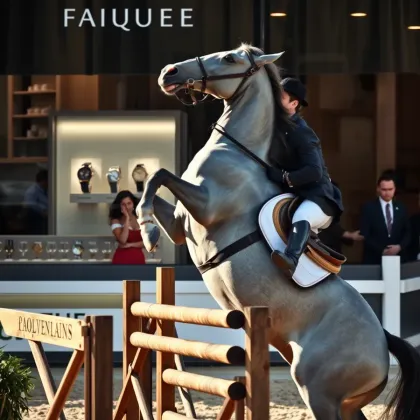
balk at phrasal verb
Pronunciation: /BAWK/
to suddenly refuse to do or accept something because it seems too difficult or too much
- She balked at the $200 fee and walked out of the showroom.
- The board balked at spending another million on the rebrand.
- Most customers balk at hidden charges, even small ones.
- He balked at first, but the discount won him over.
Common phrases balk at the pricebalk at the ideacustomers balk at
Word family balkbalkedbalking
How to use it: Used with 'at' — you balk at something. Common with prices, demands and big commitments. Slightly more formal and vivid than just 'refuse'.
- Similar
- refuse, shy away from, draw the line at
- Opposite
- accept, embrace, go along with
- Often used in
- retail, business deals, personal finance
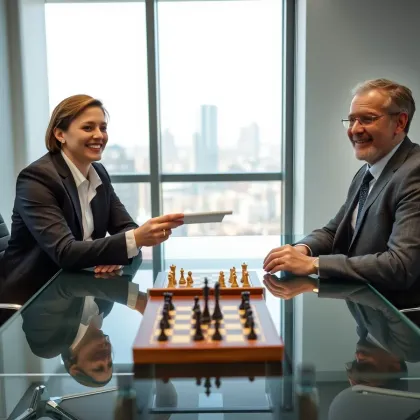
concede verb
Pronunciation: /kun-SEED/
to admit something is true, often unwillingly, or to give up a point in an argument
- I'll concede the delivery date was too ambitious, but the quality is unmatched.
- After an hour of debate, she finally conceded that the budget was unrealistic.
- The company conceded ground on the warranty but not on the price.
- He conceded defeat gracefully and shook his opponent's hand.
Common phrases concede a pointconcede groundconcede that something is true
Word family concessionconcedingconcede
How to use it: Often followed by 'that' + clause, or used with abstract objects like 'a point' or 'ground'. In negotiation it implies a deliberate, strategic giving-up, not total surrender.
- Similar
- admit, yield, give ground
- Opposite
- insist, deny, hold firm
- Often used in
- sales, politics, everyday arguments

leverage noun (also verb)
Pronunciation: /LEV-er-ij/
the power or advantage you use to get what you want in a deal or situation
- Knowing they had three other offers gave us real leverage in the negotiation.
- The supplier used its dominant market position as leverage.
- She leveraged her insider knowledge to win the contract.
- Without leverage, you're just hoping the other side is generous.
Common phrases have leverageuse something as leveragenegotiating leverage
Word family leverleverageleveraged
How to use it: In business talk, 'leverage' as a verb is everywhere (leverage your strengths), though some critics find it jargon-heavy. As a noun it means bargaining power.
- Similar
- bargaining power, advantage, clout
- Opposite
- weakness, disadvantage, vulnerability
- Often used in
- business, politics, salary talks

sticker shock noun phrase
Pronunciation: /STIK-er-shok/
the shock or unpleasant surprise you feel when you see that something costs much more than expected
- Online it looked cheap, but sticker shock hit me the moment I saw it in the shop.
- First-time visitors to the city always get sticker shock at hotel prices.
- The dealership counts on sticker shock so the 'cheaper' model seems like a bargain.
- I got serious sticker shock at the quote for renovating the kitchen.
Common phrases get/suffer sticker shockmild sticker shockavoid sticker shock
Word family shockstickersticker price
How to use it: Informal but widely used in business and everyday speech. Always uncountable — you get sticker shock, not 'a sticker shock'.
- Similar
- price shock, outrage, disbelief
- Opposite
- pleasant surprise, bargain feeling
- Often used in
- shopping, cars, travel

sweeten the deal idiom
Pronunciation: /SWEET-en thuh DEEL/
to add something extra, like a bonus or benefit, to make an offer more attractive
- To sweeten the deal, they threw in two years of free maintenance.
- The landlord sweetened the deal by covering the utilities.
- If the client hesitates, offer a free trial to sweeten the deal.
- A signing bonus should sweeten the deal nicely.
Common phrases sweeten the deal withthrow in a sweetenersweeten the pot
Word family sweetensweetenersweet
How to use it: Informal and positive — you sweeten a deal to persuade, not to trick. The alternative phrase 'sweeten the pot' means the same thing.
- Similar
- throw in extras, add incentives, improve the offer
- Opposite
- tighten the terms, make less attractive
- Often used in
- sales, job offers, rentals
3 Reading
A short article about why 'it's too expensive' is rarely the end of a sales conversation — and what skilled sellers actually do about it.
In class, you read the text aloud. I help with pronunciation and natural rhythm, and then we talk about it.
When the Client Says 'It's Too Much'
Every salesperson knows the moment. You've presented your proposal, the client nods along, and then comes the sentence that stops most people cold: 'It's just too expensive.' Many sellers take it as a rejection and quietly give up. That's usually a mistake, because a price objection is rarely a firm no — it's more often an invitation to talk.
The first thing experienced sellers do is resist the urge to panic and slash the price. When a buyer balks at the number, the worst move is to immediately drop it, since that signals the original price was inflated all along. Instead, good sellers get curious. 'Too expensive compared to what?' is a surprisingly powerful question, because it forces the client to reveal what they're actually measuring against.
Sometimes the objection isn't about money at all. A client who says the price is steep may be unconvinced about the value, or may simply be testing whether the seller will fold under pressure. Skilled sellers concede small points where it builds trust — 'you're right, that timeline is tight' — but they don't concede on value. Conceding gracefully on one thing can actually strengthen your position on the next.
Savvy negotiators also look for leverage. If you know the client has already spent three months choosing a vendor, or that their current supplier is letting them down, that's leverage you can use to reframe the conversation: the real question isn't the price, it's the cost of doing nothing. Shifting the frame like that often does more than any discount would.
And when goodwill runs low, there's always the option to sweeten the deal without touching the price: a longer warranty, faster delivery, extra training for the team. The best sellers make the client feel they've won something, even when the number on the invoice never moved. In the end, handling a price objection isn't about arguing — it's about listening for what the client is really afraid of.
4 Comprehension
We check what you understood from the reading. You explain your answer in your own words. (The answers are under each question.)
-
What does 'balk at' mean?
Show answer
To suddenly refuse something because it seems too much
'Balk at' means to stop short and refuse to go along with something, usually because it seems too big, too hard or too expensive.
-
In which situation would you most naturally 'concede' something?
Show answer
When you decide to admit your opponent has a fair point
To concede is to admit or give up a point, often unwillingly or strategically. It happens when the other side's argument has some force.
-
What does 'leverage' mean in a negotiation?
Show answer
An advantage or power you can use to get what you want
Leverage is your bargaining power — the thing that gives you an edge, like competing offers or inside knowledge.
-
If you get 'sticker shock', what has happened?
Show answer
You're shocked by how expensive something is
'Sticker shock' is the unpleasant surprise of seeing a price far higher than you expected.
-
What does it mean to 'sweeten the deal'?
Show answer
To add something extra to make the offer more attractive
To sweeten the deal is to add a bonus, benefit or extra that makes the offer tempting — often without lowering the main price.
5 Idioms and phrasal verbs
You find each expression in the reading and guess what it means. Then we practise using it to talk about your own life and work.
stop someone cold
From the readingthen comes the sentence that stops most people cold
What do you think it means? Show meaning
to suddenly make someone unable to continue or respond (similar: leave someone speechless)
Example: The question about my salary completely stopped me cold in the interview.
- The picture: a machine that stops dead, instantly. Very common in American English. ✓ stopped me cold ✗ stopped me coldly
Your turn: What question or comment tends to stop you cold in a conversation?
fold under pressure
From the readingmay simply be testing whether the seller will fold under pressure
What do you think it means? Show meaning
to give up or give in when things get difficult (similar: give in)
Example: I held out for weeks, but I folded under pressure and accepted their offer.
- From card games: you 'fold' by dropping out of a hand. It sounds a bit weak, so be careful using it about yourself.
- You can also just say someone 'folded' if the pressure is obvious.
Your turn: Do you fold under pressure when negotiating, or can you hold your ground? Tell me about a time.
slash prices
From the readingresist the urge to panic and slash the price
What do you think it means? Show meaning
to reduce prices or costs by a large amount, suddenly (similar: cut prices sharply)
Example: The store slashed prices by 40% to clear out old stock.
- The picture: a knife slash — a big, violent cut, not a small discount. Often used in news about companies cutting jobs or budgets too.
Your turn: When a shop slashes prices, do you think it's a genuine bargain or a trick? Have you ever regretted grabbing a slashed price?
let someone down
From the readingor that their current supplier is letting them down
What do you think it means? Show meaning
to disappoint someone by failing to do what you promised (similar: disappoint)
Example: My internet provider keeps letting me down — the connection drops every day.
- Separable: 'let me down', 'let the team down'. The 'down' adds the feeling of being dropped or failed.
- Stronger and more personal than just 'disappoint' — it implies broken trust. ✓ He let me down ✗ He let down me
Your turn: Who's someone who has never let you down? And has a company or service ever really let you down?
6 Sentence frames
Practice expressing ideas about negotiating, pushing back on prices and justifying value.
We start with the simple frame and step up to longer, more natural sentences. You fill the gaps with your own ideas, and I help you sound more fluent.
Conceding a point while defending your position
Grammar concessive clauses (while / although)hedging with 'I take your point'
-
Simple
I take your point about ___, but ___.
Acknowledges the other side, then pushes back with your main argument.
Example answers
- I take your point about the price, but think about the five years of warranty.
- I take your point about the timeline, but quality takes time.
- I take your point about the budget, but cutting corners costs more later.
-
Stronger
While I concede that ___, the real issue is ___.
Gives ground on a small point, then redirects to the bigger one.
Example answers
- While I concede that the upfront cost is steep, the real issue is what you'll save over a decade.
- While I concede that our competitor is cheaper, the real issue is reliability.
- While I concede that delivery is slower, the real issue is the quality of the finished work.
Justifying a price with evidence
Grammar result clauses (which means / so that)comparison structures
-
Simple
The price reflects ___, which means ___.
Links the price directly to a concrete benefit.
Example answers
- The price reflects the materials, which means it lasts twice as long.
- The price reflects the experience of the team, which means fewer mistakes.
- The price reflects the after-sales support, which means you're never on your own.
-
Stronger
If you compare it to ___, you'll see that ___.
Uses comparison to justify the cost.
Example answers
- If you compare it to doing nothing, you'll see that delay costs more than the fee.
- If you compare it to the market average, you'll see that we're not actually the most expensive.
- If you compare it to hiring in-house, you'll see that outsourcing is cheaper overall.
Making and reacting to counter-offers
Grammar conditionals (if you could / provided that)polite hedging with 'what if'
-
Simple
What if we ___? Would that ___?
Offers a small extra and checks whether it helps.
Example answers
- What if we covered the delivery? Would that change things?
- What if we added a free trial month? Would that help?
- What if we extended the warranty? Would that work for you?
-
Stronger
I can't move on the price, but I could ___ if that ___.
Holds firm on the number while offering an alternative.
Example answers
- I can't move on the price, but I could speed up delivery if that would seal the deal.
- I can't move on the price, but I could include training if that matters more to you.
- I can't move on the price, but I could split the payments if cash flow is the issue.
7 Fill in the blanks
A quick practice with the new words: you choose the right word for each gap.
Word box balk atsticker shocksweeten the dealleverageconcede
Negotiating is as much psychology as arithmetic. A client who 1 your quote isn't always objecting to the number itself — they may simply be experiencing 2 after seeing prices they hadn't anticipated. The skilful seller doesn't panic and slash the figure. Instead, they might 3 with extras that cost little but feel valuable, or find 4 in what they know about the client's situation and reframe the debate around it. And crucially, they know when to 5 a minor point, because giving ground on small things builds the trust you need to hold firm on the big ones.
Show answers
- balks at
- sticker shock
- sweeten the deal
- leverage
- concede
8 Sentence unscramble
You put the words in order and say the sentence out loud.
-
momentthemspotatMostcustomersbalktheythefeeshidden
Show answer
Most customers balk at hidden fees the moment they spot them.
-
inbydealasweetenedsellerwarrantyThefreethethrowing
Show answer
The seller sweetened the deal by throwing in a free warranty.
-
threerealleverageothergaveatoffershertableHavingthe
Show answer
Having three other offers gave her real leverage at the table.
9 Discussion
The main speaking part of the lesson. We discuss each question together, and you use the new words and sentence frames. I ask follow-up questions and correct your mistakes as we go.
-

Prices often feel unfair simply because they're higher than we expected. Psychologists call the gap between expectation and reality the real source of a price objection — the number itself matters less than the surprise. That's why the same coffee feels reasonable in one city and outrageous in another.
When was the last time you got genuine sticker shock? What were you buying, and did anything manage to change your mind?
-

Some people love to negotiate and treat every price as an opening offer. Others find asking for a discount slightly embarrassing and would rather just pay. Culture, personality and past experiences all shape how comfortable we are with haggling.
How comfortable are you with bargaining? Where does that come from — your family, the culture you grew up in, or just your personality?
-

Many salespeople believe that whenever a client pushes back on price, the answer is a discount. But every price cut eats into profit, and it can also make buyers wonder what was wrong with the original figure. Some argue that the ability to say 'no, but here's what I can do instead' is the mark of a truly confident seller.
Do you think sellers give discounts too easily? What would happen if businesses simply refused to lower prices and only sweetened the deal instead?
-

In any negotiation, one side usually has more information than the other — about budgets, deadlines, or competing offers. That asymmetry is where leverage comes from. Some people think using hidden information is just smart business; others see it as a bit unfair, since the weaker party may agree to something they'd regret.
If you knew the other side was desperate to close a deal, would you use that knowledge to push the price up? Where's the line between clever and unfair?
-

There's a saying that the most expensive thing you can buy is a cheap product that doesn't last. Buyers who focus only on the sticker price often pay more in repairs, replacements and frustration. Sellers who understand this try to shift the conversation from cost to value — but that shift only works if the customer trusts them.
Have you ever paid more for something and been glad you did? Or have you ever gone cheap and paid for it later? Tell me the story.
10 Quiz
A short review at the end of the lesson to check what you remember.
-
Which sentence uses 'balk at' correctly?
Show answer
He balked at the quote and asked for a breakdown.
'Balk at' always takes 'at' before the thing being refused, followed by a noun — 'balked at the quote' is the correct pattern.
-
What is the noun form of 'concede'?
Show answer
Concession
A 'concession' is the thing you give up or admit in a negotiation — e.g. 'we made two concessions to close the deal'.
-
True or false: 'leverage' can be used as both a noun and a verb.
Show answer
True
As a noun it means bargaining power; as a verb it means to use an advantage — 'they leveraged their reputation to win the contract'.
-
'Sticker shock' is best described as:
Show answer
Shock at how expensive something turns out to be
Sticker shock is the unpleasant surprise of seeing a much higher price than anticipated, from the price sticker on a product.
-
If a salesperson decides to 'sweeten the deal', they will most likely:
Show answer
Add an extra benefit like free delivery or a warranty
Sweetening the deal means adding something extra to make the offer more tempting, usually without changing the base price.
-
If a negotiator 'folds under pressure', what do they do?
Show answer
They give in and agree
'Fold under pressure' means to give up or give in when someone pushes hard, like dropping out of a card game.
Lesson created with PlanwiseESL.
Useful for: English for sales professionals · Business English lessons
More sample lessons
Keeping the Conversation Going
A B2 English lesson on keeping a conversation going, as I teach it one-to-one: icebreakers, follow-up questions and rapport, with a reading and discussion.
See the lesson → Level B2Talking Money: Presenting Monthly Results
A B2 business English lesson for finance, as I teach it one-to-one: forecasts, shortfalls and the outlook, with a reading, sentence frames and discussion.
See the lesson → Level B2Handling Questions After a Presentation
How to answer questions after a presentation or conference talk in English: clarify, rephrase, acknowledge a fair point. A B2 lesson I teach one-to-one.
See the lesson →All sample lessons: Patient Handover English for Doctors and Nurses · Understanding Contracts in Plain English · How to Talk About Your Career Goals and Leadership in an Interview · Vocabulary to Talk About Geopolitics in English · What British Colleagues Really Mean: Polite, Indirect English at Work · Vocabulary to Talk About AI in English · Business Small Talk in English · How to Disagree Diplomatically in English · Talk About the Pros and Cons of International Aid in English · How to Stop Translating in Your Head When You Speak English · Words to Describe Inequality in English · Health and Fitness Vocabulary in English · Vocabulary to Talk About Films in English · Vocabulary to Talk About Money in English · Vocabulary to Talk About the Environment in English · Words to Describe a Leader in English · Explaining a Technical Problem in English