Presenting Monthly Results in English
Lesson: Talking Money: Presenting Monthly Results
This is a lesson I teach to finance and business professionals who present numbers in English. Together we learn words like forecast, shortfall and outlook, and practise explaining monthly results clearly, even when the news is not good.
In short: the key language in this lesson
Useful phrases
- Comparing plans and expectations with reality: The forecast said ___, but in reality ___ because ___.
- Weighing pros and cons of a decision: ___ might help with ___, but on the other hand, it could ___.
- Imagining and explaining hypothetical situations: If my results were worse than expected, I would ___ and then ___.
Key words
- forecast:
- a statement of what you expect to happen in the future
- shortfall:
- an amount that is less than what you need or expected
- outlook:
- how the future is likely to be; your general attitude to life
- streamline:
- to make a process simpler and more efficient
- offset:
- to balance one thing against another so the effect is smaller
Idioms and phrasal verbs
- dread:
- to feel worried about something that will happen
- jump into:
- to start something suddenly, without preparing people
- balance out:
- to make two sides equal, so one cancels the other
- stare at the floor:
- to look embarrassed, bored or uncomfortable
This lesson is designed to be taught live, not studied alone. I create every lesson and teach it myself, one-to-one. In class, I guide you through each part, ask follow-up questions, correct your mistakes and help you say more.
Here you can see exactly what a lesson with me looks like. For my students, I build lessons like this around their own job and goals.
1 Warm-up
Look at these situations about money and results at work. Tell me what you think before we read an article about giving financial updates.
We start with a relaxed chat. I ask these questions, you answer freely, and I note useful language for later.
- Have you ever had to explain numbers or results to other people? What happened?
- Do you think presenting bad news to a boss or team is harder than presenting good news? Why?
- When you hear someone talk about money, what makes you trust them or doubt them?
- Do you prefer looking at charts and numbers, or hearing someone explain things in words?
- If your monthly spending went over your budget, how would you explain it to someone?
2 Key vocabulary
Before the reading, we go through 5 key words together: how to say them, what they mean, and how people really use them.

forecast noun (also verb)
Pronunciation: /FORE-cast/
a statement of what you expect to happen in the future
- Our sales forecast for this year looks positive.
- The weather forecast says it will rain all weekend.
- The company missed its profit forecast again.
- I forecast that we'll finish the project by June.
Common phrases sales forecastweather forecastmeet the forecast
Word family forecast (verb)forecaster
How to use it: Used a lot in business and weather talk. The past tense is 'forecast' (not 'forecasted'). Common in phrases like 'according to the forecast'.
- Similar
- prediction, projection, estimate
- Opposite
- reality, the past
- Often used in
- business reports, weather news, sports predictions

shortfall noun
Pronunciation: /SHORT-fall/
an amount that is less than what you need or expected
- We have a shortfall of two thousand dollars this month.
- The charity faced a funding shortfall after donations dropped.
- There was a shortfall in the number of tickets sold.
- The government announced how it would deal with the budget shortfall.
Common phrases budget shortfallfunding shortfalla shortfall of/in something
Word family shortfall short (of)
How to use it: Almost always about money, supplies or numbers. Followed by 'of' + amount, or 'in' + area. Sounds more serious than just 'a little less'.
- Similar
- deficit, gap, shortage
- Opposite
- surplus, excess
- Often used in
- company finance, charities, government budgets

outlook noun
Pronunciation: /OUT-look/
how the future is likely to be; your general attitude to life
- The economic outlook for next year is uncertain.
- Analysts say the outlook for travel companies is improving.
- She has a very positive outlook on life.
- The company's outlook changed after losing its biggest customer.
Common phrases economic outlooka positive/bright outlookthe outlook for something
Word family looklookout
How to use it: Two main uses: the future situation (business, economy) and someone's attitude ('an optimistic outlook'). Usually with an adjective: good, poor, bright, gloomy.
- Similar
- prospects, outlook on life, view
- Opposite
- pessimism, past
- Often used in
- financial news, career talk, personal attitudes

streamline verb
Pronunciation: /STREAM-line/
to make a process simpler and more efficient
- We streamlined the ordering system and saved two hours a week.
- The new app streamlines communication between departments.
- They streamlined the hiring process from six steps to three.
- We need to streamline how we handle customer complaints.
Common phrases streamline a processstreamline operationsstreamlined system
Word family streamlined (adjective)streamlining (noun)
How to use it: Very common in business talk about improving how things work. It means removing waste and steps, not making things smaller in size.
- Similar
- simplify, organise, smooth out
- Opposite
- complicate, slow down
- Often used in
- workplaces, technology, daily routines

offset verb (also noun)
Pronunciation: /OFF-set/
to balance one thing against another so the effect is smaller
- The extra sales offset the money we lost on returns.
- Higher rent was offset by lower travel costs.
- She cycled to work to offset her carbon footprint.
- The gains in one market offset the losses in another.
Common phrases offset the costoffset lossesoffset by something
Word family offset (noun)
How to use it: Often about money, losses and gains, but also about balancing negative effects (like carbon emissions). Past tense is 'offset'. Often passive: 'was offset by'.
- Similar
- balance out, compensate for, counter
- Opposite
- add to, worsen
- Often used in
- accounting, environmental talk, budgets
3 Reading
Read this short story about a manager presenting monthly results to her team. What would you have done differently?
In class, you read the text aloud. I help with pronunciation and natural rhythm, and then we talk about it.
The Monthly Meeting That Went Wrong
Maya had been dreading the monthly meeting for a week. Her team's sales were down, and she had to present the numbers to the whole department. The forecast from January had promised a strong quarter, but reality had other plans.
When she opened her slides, she jumped straight into the bad news: a shortfall of almost twenty percent against target. People shifted in their seats. Someone whispered. Maya realised her mistake too late - she had buried her audience in numbers without any story behind them.
The next month, she tried a different approach. She started with the outlook for the coming quarter, not the past. 'Here's where we're going,' she said, 'and here's how we get there.' Then she explained how they planned to streamline the ordering process, cutting out steps that wasted everyone's time.
She also had some good news to balance things out. A new online ad campaign had brought in extra income that partly offset the drop in store sales. For the first time, the team saw the full picture, not just the problems.
By the end, people were asking questions and offering ideas instead of staring at the floor. Maya learned something simple: numbers don't speak for themselves. A good presenter gives them meaning, and a clear story makes even bad news easier to face.
4 Comprehension
We check what you understood from the reading. You explain your answer in your own words. (The answers are under each question.)
-
What does 'forecast' mean?
Show answer
A statement of what you expect to happen
A forecast is about the future - what you think will happen, like a sales forecast or weather forecast.
-
In which situation would you use the word 'shortfall'?
Show answer
When you have less money than you planned
A shortfall is the gap between what you have and what you need or expected - it's always about coming up short.
-
Which sentence uses 'outlook' correctly?
Show answer
The outlook for the travel industry is improving.
'Outlook' is a noun about the future situation or an attitude. It isn't a verb and it isn't a physical object or cost.
-
What does it mean to 'streamline' a process?
Show answer
To make it faster and simpler by removing extra steps
Streamlining means cutting out anything that wastes time or effort so things run smoothly.
-
Which sentence uses 'offset' correctly?
Show answer
The extra income offset our losses from the slow month.
'Offset' means to balance one thing against another so the negative effect is smaller. It is not a synonym for 'delay', 'send' or 'discuss'.
5 Idioms and phrasal verbs
You find each expression in the reading and guess what it means. Then we practise using it to talk about your own life and work.
dread
From the readingMaya had been dreading the monthly meeting for a week.
What do you think it means? Show meaning
to feel worried about something that will happen (similar: be scared of)
Example: I dread Monday mornings - I never sleep well on Sunday.
- Not a real phrasal verb, but it works like one: it's followed by a noun or a gerund. ✓ I dread getting bad news. ✗ I dread to get bad news (when talking about the future).
- Very common in everyday talk: 'I dread to think what will happen.'
Your turn: Is there a day, meeting or task you always dread? What is it, and why?
jump into
What do you think it means? Show meaning
to start something suddenly, without preparing people (similar: start right away)
Example: He jumped into the topic without saying hello first.
- The small word 'into' gives the picture of diving straight in - no warm-up.
- You can also 'jump into a conversation' or 'jump into a new project'.
Your turn: Do you prefer to jump into a difficult topic, or warm people up first? Can you give an example?
balance out
From the readingShe also had some good news to balance things out.
What do you think it means? Show meaning
to make two sides equal, so one cancels the other (similar: even out)
Example: The busy weekend balanced out the quiet week before it.
- Separable: 'balance things out' or 'balance out things' both work.
- 'Out' here suggests the final result, after everything is counted.
Your turn: When things go badly for you, what do you do to balance things out? Do you look for good news, or just wait?
stare at the floor
From the readingBy the end, people were asking questions and offering ideas instead of staring at the floor.
What do you think it means? Show meaning
to look embarrassed, bored or uncomfortable (similar: avoid eye contact)
Example: When the boss asked who broke the printer, everyone was staring at the floor.
- The picture is simple: people look down because they don't want to be noticed or don't know what to say.
- Great for describing awkward moments in stories.
Your turn: When was the last time you were staring at the floor - an awkward moment at work or with friends?
6 Sentence frames
Practice expressing ideas about results, plans and trade-offs using these sentence frames.
We start with the simple frame and step up to longer, more natural sentences. You fill the gaps with your own ideas, and I help you sound more fluent.
Comparing plans and expectations with reality
Grammar past simple vs. future formscontrast connectors (but, although, while)
-
Simple
We expected ___, but we got ___.
A simple contrast between plan and reality
Example answers
- We expected more customers, but we got fewer.
- We expected a quiet month, but we got a busy one.
- We expected to finish early, but we got delays.
-
Stronger
The forecast said ___, but in reality ___ because ___.
Adds a reason for the difference
Example answers
- The forecast said sales would rise, but in reality they fell because of the holiday season.
- The forecast said costs would stay low, but in reality they rose because fuel got expensive.
- The forecast said we'd sign five clients, but in reality we signed two because the market slowed down.
Weighing pros and cons of a decision
Grammar comparativeswhereas / on the other handhedging (might, could, probably)
-
Simple
One advantage is ___. One disadvantage is ___.
Simple two-sided structure
Example answers
- One advantage is saving time. One disadvantage is the cost.
- One advantage is fewer mistakes. One disadvantage is more training.
- One advantage is less stress. One disadvantage is less control.
-
Stronger
___ might help with ___, but on the other hand, it could ___.
Adds possibility and a counterpoint
Example answers
- Automating the reports might help with speed, but on the other hand, it could hide important details.
- Hiring an assistant might help with workload, but on the other hand, it could strain the budget.
- Working from home might help with focus, but on the other hand, it could weaken team spirit.
Imagining and explaining hypothetical situations
Grammar second conditionalwould + verbif I were...
-
Simple
If I had a shortfall, I would ___.
Simple conditional with one action
Example answers
- If I had a shortfall, I would spend less.
- If I had a shortfall, I would ask for help.
- If I had a shortfall, I would look for extra work.
-
Stronger
If my results were worse than expected, I would ___ and then ___.
Conditional with two steps
Example answers
- If my results were worse than expected, I would explain the reasons honestly and then suggest a plan.
- If my results were worse than expected, I would stay calm and then focus on solutions.
- If my results were worse than expected, I would tell my boss early and then ask for advice.
7 Fill in the blanks
A quick practice with the new words: you choose the right word for each gap.
Word box forecastshortfalloutlookstreamlineoffset
Every month, Daniel's team sends a short report to the head office. Last month was a hard one: there was a big 1 in sales, mostly because two large customers left. Still, the 2 for the next few months looks better, thanks to some new contracts. To save money, the team decided to 3 their weekly meetings, cutting them from two hours to thirty minutes. They also raised prices slightly, which helped to 4 the lost income. Now everyone is waiting to see if the new 5 for next quarter turns out to be right.
Show answers
- shortfall
- outlook
- streamline
- offset
- forecast
8 Sentence unscramble
You put the words in order and say the sentence out loud.
-
fornextquartersaleslookspromisingourforecastvery
Show answer
Our sales forecast for next quarter looks very promising.
-
offsetourshoponlinelossesordersthenewinthe
Show answer
The new online orders offset our losses in the shop.
-
shetheprocessbeforedecidedthetoreportingmeetingstreamline
Show answer
She decided to streamline the reporting process before the meeting.
9 Discussion
The main speaking part of the lesson. We discuss each question together, and you use the new words and sentence frames. I ask follow-up questions and correct your mistakes as we go.
-
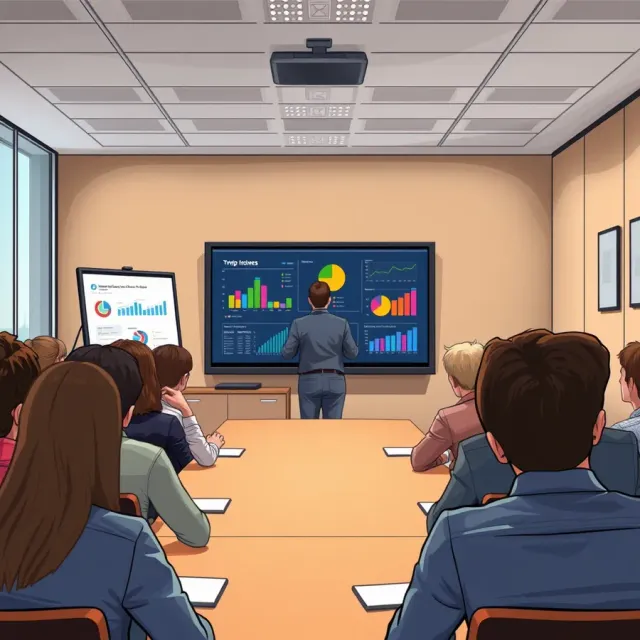
Maya's first presentation failed because she gave numbers without a story. Her second one worked because she gave the team a direction and a reason to hope. Good and bad presentations happen everywhere - not just in finance.
Think of a presentation, talk or announcement you remember - good or bad. What made it work or fail? Would you have done anything differently?
-

A forecast is a guess about the future, and guesses are often wrong. Some people say it's better not to make predictions at all. Others say planning ahead is essential, even when you'll be wrong sometimes.
Do you think it's worth making plans and predictions when the future is so uncertain? Why or why not?
-
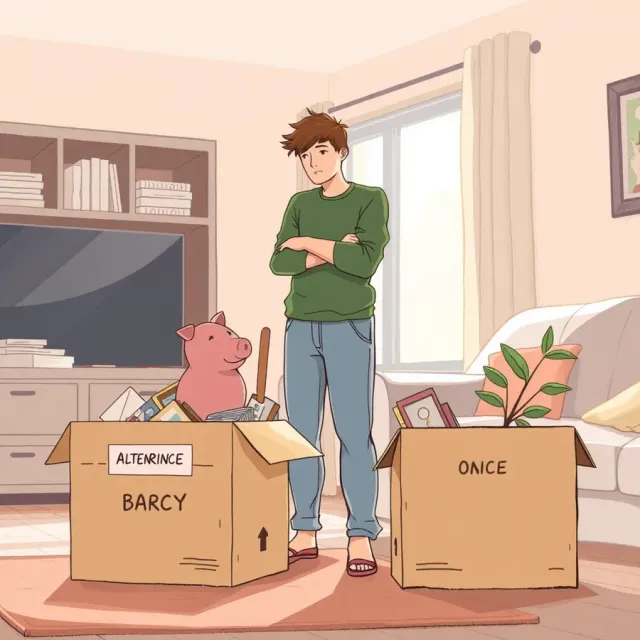
When there's a shortfall - less money than expected - people respond in different ways. Some cut spending immediately. Others invest more to fix the underlying problem. Both approaches have risks.
If your income suddenly dropped by twenty percent next month, what would you cut first, and what would you protect? Why?
-
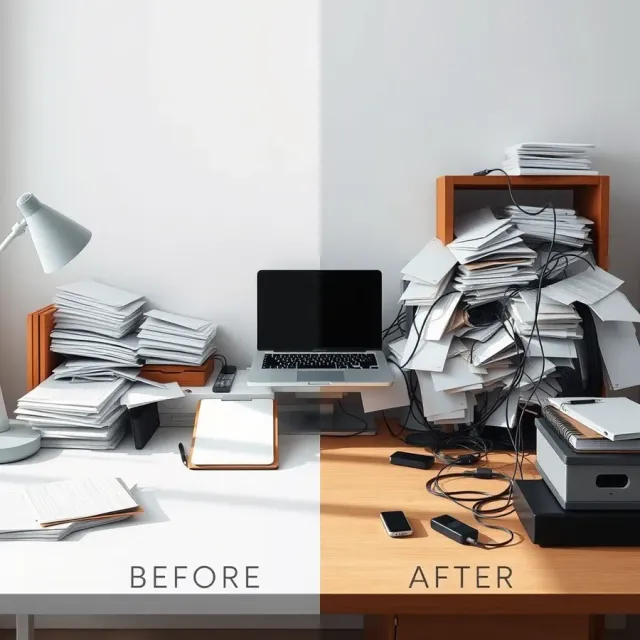
Many companies now try to streamline everything - fewer meetings, simpler processes, automated tools. It saves time, but some people feel something human gets lost along the way.
Is there an area of your life or work that you'd love to streamline? What would you cut out, and what might you lose by doing it?
-

Maya offset her bad sales news with good news from the online campaign. Some people think this 'sandwich' approach - bad news between good news - is kind. Others say it hides the truth and wastes time.
When you have bad news to share, do you prefer to say it directly or soften it first? Which style do you like to receive from others?
10 Quiz
A short review at the end of the lesson to check what you remember.
-
Which word means 'an amount that is less than what you need or expected'?
Show answer
shortfall
A shortfall is the gap between what you have and what you need, like falling short of a target.
-
True or false: 'The extra income offset our losses' means the extra income made the losses worse.
Show answer
False
'Offset' means to balance or cancel out a negative effect, so the extra income made the losses smaller, not worse.
-
A company says: 'The outlook for next year is bright.' What are they describing?
Show answer
Their positive expectations for the future
'Outlook' describes how the future is likely to be. 'Bright' means positive and hopeful.
-
Which phrase is a common collocation with 'forecast'?
Show answer
a sales forecast
'Sales forecast' and 'weather forecast' are very common pairings. The other options don't make sense.
-
True or false: If you streamline a process, you usually make it more complicated and slower.
Show answer
False
Streamlining means simplifying a process by removing extra steps, making it faster and more efficient.
-
If someone 'dreads' a meeting, how do they feel about it?
Show answer
They are worried about it
'Dread' means to feel worried or afraid about something in the future, like Maya dreading her monthly meeting.
Lesson created with PlanwiseESL.
Useful for: English for finance professionals · Business English lessons
More sample lessons
Handling Questions After a Presentation
How to answer questions after a presentation or conference talk in English: clarify, rephrase, acknowledge a fair point. A B2 lesson I teach one-to-one.
See the lesson → Level B2What British Colleagues Really Mean: Polite, Indirect English at Work
Why “not bad” means good and “would you mind…?” means now: polite, indirect British English at work. A B2 lesson I teach live, one-to-one.
See the lesson → Level C1The Art of Business Small Talk
Learn the words for business small talk, like rapport, pleasantries and banter, and practise the chat before a meeting starts. A C1 lesson I teach live.
See the lesson →All sample lessons: Understanding Contracts in Plain English · How to Talk About Your Career Goals and Leadership in an Interview · Vocabulary to Talk About Geopolitics in English · Vocabulary to Talk About AI in English · How to Disagree Diplomatically in English · Talk About the Pros and Cons of International Aid in English · How to Stop Translating in Your Head When You Speak English · Words to Describe Inequality in English · Health and Fitness Vocabulary in English · Vocabulary to Talk About Films in English · Vocabulary to Talk About Money in English · Vocabulary to Talk About the Environment in English · Words to Describe a Leader in English · Explaining a Technical Problem in English · Handling Price Objections in English · How to Keep a Conversation Going in English · Patient Handover English for Doctors and Nurses