Vocabulary to Talk About Geopolitics in English
Lesson: The Great Game: How Countries Compete for Power
This is a lesson I teach to adults who want to discuss world events, power and international relations in English, not only read about them. Together we learn words like alliance, sanctions and balance of power, then use them in a real discussion where I push back on your views.
In short: the key language in this lesson
Useful phrases
- Comparing different views on world events: While ___ argues that ___, I'd say ___, especially when it comes to ___.
- Weighing pros and cons of pressure versus persuasion: ___ has the advantage of ___, but on the other hand, ___.
- Imagining hypothetical situations in world politics: If ___ happened, I think ___ might ___, and that could change ___.
Key words
- alliance:
- An agreement between countries or groups to support each other
- sanctions:
- Punishments, often economic, used to pressure a country to change
- sovereignty:
- A country's full right to govern itself without outside control
- superpower:
- A country with the greatest power and influence in the world
- rivalry:
- Competition between two sides who each want to win or be best
- trade war:
- A conflict where countries tax or block each other's goods
- balance of power:
- A situation where no country or group is stronger than the others
- diplomacy:
- Managing relations between countries through talking, not force
Idioms and phrasal verbs
- cut off:
- to stop someone having or getting something
- make headlines:
- to be in the news; get a lot of attention
- join together:
- to unite; become one group
- feel the cost:
- to suffer the bad effects, especially with money
This lesson is designed to be taught live, not studied alone. I create every lesson and teach it myself, one-to-one. In class, I guide you through each part, ask follow-up questions, correct your mistakes and help you say more.
Here you can see exactly what a lesson with me looks like. For my students, I build lessons like this around their own job and goals.
1 Warm-up
Look at the questions and talk about power in the world today — which countries have it, and how they use it.
We start with a relaxed chat. I ask these questions, you answer freely, and I note useful language for later.
- Which countries do you think are the most powerful in the world right now? Why?
- When you hear the word 'power' in the news, what comes to mind first?
- Do you follow news about other countries, or mostly news about your own?
- Can a small country be powerful? How?
- If two countries disagree strongly, what do you think they should do first — talk, or put pressure on each other?
2 Key vocabulary
Before the reading, we go through 8 key words together: how to say them, what they mean, and how people really use them.
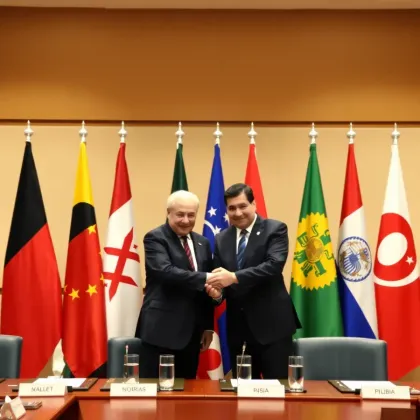
alliance noun
Pronunciation: /uh-LY-uhns/
An agreement between countries or groups to support each other
- The two countries formed an alliance after years of tension.
- Military alliances can deter attacks.
- The alliance broke down when interests changed.
- Our company has an alliance with a German firm.
Common phrases form an alliancemilitary alliancebreak an alliance
Word family allyallied
How to use it: Countable noun. Often used with 'form', 'join' or 'break'. An 'ally' (noun) is the partner itself; 'allied' is the adjective.
- Similar
- partnership, pact, coalition
- Opposite
- rivalry, hostility
- Often used in
- politics, war and peace, business
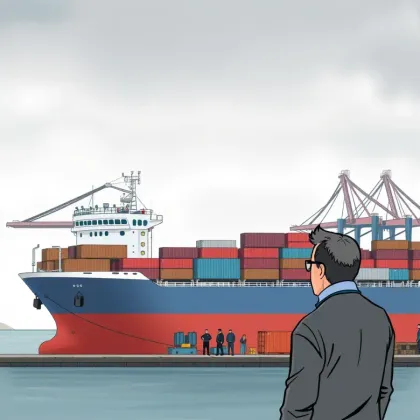
sanctions noun (usually plural)
Pronunciation: /SANK-shunz/
Punishments, often economic, used to pressure a country to change
- The country's economy suffered under international sanctions.
- Sanctions were lifted after the peace deal.
- They imposed sanctions on key exports.
- Sanctions can hurt ordinary people most.
Common phrases impose sanctionslift sanctionseconomic sanctions
Word family sanction (verb)sanctioned
How to use it: Almost always plural in the 'punishment' meaning. Verbs that go with it: impose, lift, ease, tighten.
- Similar
- penalties, restrictions, embargo
- Opposite
- rewards, incentives
- Often used in
- news, economics, politics
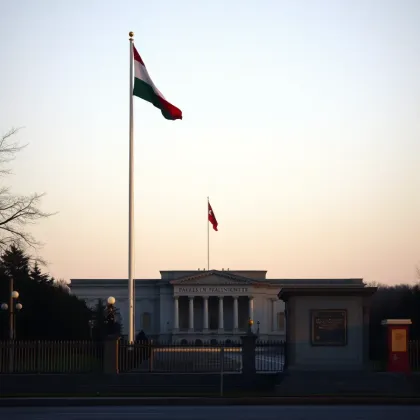
sovereignty noun (uncountable)
Pronunciation: /SOV-run-tee/
A country's full right to govern itself without outside control
- The small nation defended its sovereignty against pressure from its neighbour.
- Joining the bloc meant giving up some sovereignty.
- They see the troops as a threat to their sovereignty.
- Sovereignty is a core principle of international law.
Common phrases national sovereigntythreat to sovereigntyrespect sovereignty
Word family sovereignsovereign state
How to use it: Uncountable. Very common in political news. Often appears in phrases like 'national sovereignty' or 'territorial sovereignty'.
- Similar
- independence, self-rule, autonomy
- Opposite
- occupation, dependence
- Often used in
- politics, law, news

superpower noun
Pronunciation: /SOO-per-POW-er/
A country with the greatest power and influence in the world
- Only a handful of countries have ever been true superpowers.
- The two superpowers competed for decades.
- Rising economies dream of superpower status.
- Superpowers often act without asking permission.
Common phrases emerging superpowerglobal superpowersuperpower status
Word family powerpowerful
How to use it: Countable noun. Also means a fictional special ability in comics ('the ability to fly is a superpower') — context makes it clear.
- Similar
- great power, global power
- Opposite
- small nation, minor power
- Often used in
- history, geopolitics, news

rivalry noun
Pronunciation: /RY-vul-ree/
Competition between two sides who each want to win or be best
- The rivalry between the two neighbours goes back a hundred years.
- Their rivalry pushed both companies to improve.
- A friendly rivalry keeps the team motivated.
- The rivalry ended with a peace agreement.
Common phrases fierce rivalrylong-standing rivalrya rivalry between X and Y
Word family rivalrivalry
How to use it: Countable or uncountable. Pattern: 'a rivalry between A and B' or 'a rivalry with someone'. Can be friendly (sport) or serious (politics).
- Similar
- competition, contest
- Opposite
- cooperation, partnership
- Often used in
- sport, business, geopolitics
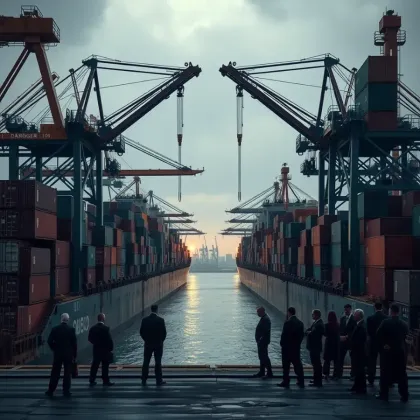
trade war noun
Pronunciation: /TRAYD WOR/
A conflict where countries tax or block each other's goods
- The trade war made everyday products more expensive on both sides.
- The two economies slid into a trade war over technology.
- Farmers were the first victims of the trade war.
- Neither side won the trade war.
Common phrases start a trade warescalate a trade warcaught in a trade war
Word family tradewar
How to use it: Countable. Used with verbs like start, escalate, win or lose. Often mentioned with 'tariffs' (taxes on imported goods).
- Similar
- trade dispute, tariff conflict
- Opposite
- free trade, trade agreement
- Often used in
- economics, news, business
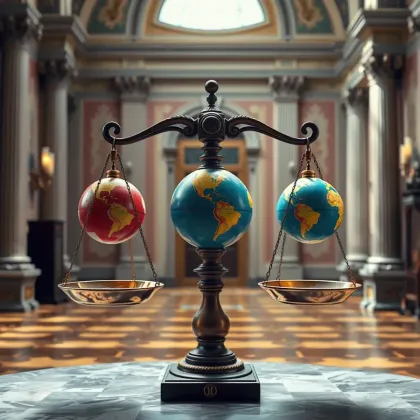
balance of power noun phrase
Pronunciation: /buh-LANS uv POW-er/
A situation where no country or group is stronger than the others
- Smaller countries often support the balance of power to stay safe.
- New weapons changed the balance of power in the region.
- The treaty was designed to keep the balance of power.
- Elections can shift the balance of power in parliament too.
Common phrases shift the balance of powerkeep the balance of power upset the balance of power
Word family balancepower
How to use it: Usually with 'the'. Verbs that go with it: keep, shift, upset, change. Also used in offices and politics for who holds influence.
- Similar
- equilibrium, stalemate
- Opposite
- domination, one-sided power
- Often used in
- geopolitics, history, politics
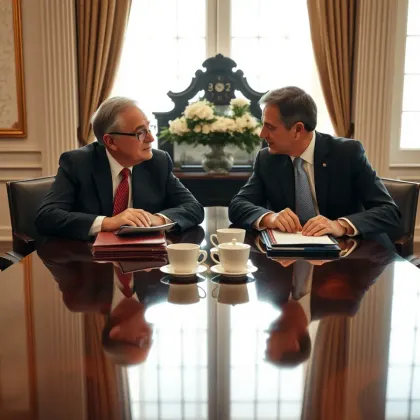
diplomacy noun (uncountable)
Pronunciation: /di-PLOH-muh-see/
Managing relations between countries through talking, not force
- After months of diplomacy, the two sides finally signed an agreement.
- Quiet diplomacy solved the crisis.
- She works in diplomacy for her country.
- Good diplomacy means knowing when to compromise.
Common phrases practise diplomacyquiet diplomacya triumph of diplomacy
Word family diplomatdiplomatic
How to use it: Uncountable. 'Diplomatic' is also useful in everyday English for someone who speaks tactfully.
- Similar
- negotiation, statecraft
- Opposite
- force, war
- Often used in
- politics, news, workplace (tact)
3 Reading
A short magazine-style article about how countries compete for influence today.
In class, you read the text aloud. I help with pronunciation and natural rhythm, and then we talk about it.
The New Great Game
For most of the last century, the world was shaped by a rivalry between two superpowers. Today the picture is more complicated. Several large countries now compete for influence at the same time, and the rules of the game are not always clear.
One of the oldest tools in this game is the alliance. Countries join together because they are stronger as a group than alone. But alliances can create problems too: when one side builds a partnership, the other side often builds one as well, and the tension grows.
Money has become a weapon. In a trade war, countries raise taxes on each other's goods, and ordinary people feel the cost. Sanctions work in a similar way: a country is cut off from banking, technology or trade until it changes its behaviour. Supporters say this avoids actual fighting; critics say it mostly hurts ordinary families.
Underneath all of this lies the idea of sovereignty — a country's right to rule itself without outside interference. Every government wants to protect it, yet every government also wants influence beyond its own borders. The result is a constant effort to keep the balance of power, so that no single country becomes too strong.
So how do countries compete without going to war? This is where diplomacy comes in: negotiation, compromise and a lot of patient talking. It rarely makes headlines, but most experts agree that quiet diplomacy prevents more conflicts than any army ever has.
4 Comprehension
We check what you understood from the reading. You explain your answer in your own words. (The answers are under each question.)
-
What does 'alliance' mean?
Show answer
An agreement between countries to support each other
An alliance is a partnership where countries agree to help each other, often for defence.
-
Which word best completes the sentence? 'The government cut off the country's banks and exports, hoping the ___ would force a change in policy.'
Show answer
sanctions
Sanctions are economic punishments designed to pressure a country into changing its behaviour.
-
What does 'sovereignty' mean in this sentence: 'The ministers refused the deal because it threatened their sovereignty.'?
Show answer
Their right to govern themselves
Sovereignty is a country's full authority to rule itself without outside control.
-
In which situation would you talk about a 'rivalry'?
Show answer
Two neighbours who have competed to build the best house for years
A rivalry is ongoing competition between two sides who each want to come out on top.
-
Which word best completes the sentence? 'After months of tense talks, it was patient ___ that finally prevented the war.'
Show answer
diplomacy
Diplomacy means solving problems between countries through negotiation and talking rather than force.
5 Idioms and phrasal verbs
You find each expression in the reading and guess what it means. Then we practise using it to talk about your own life and work.
cut off
From the readingSanctions work in a similar way: a country is cut off from banking, technology or trade until it changes its behaviour.
What do you think it means? Show meaning
to stop someone having or getting something (similar: block)
Example: The storm cut off the village from the rest of the country for two days.
- "Off" suggests a connection being broken, like cutting a rope. You can be cut off from people, money or the internet.
- Also used for phone calls: "Sorry, we got cut off — can you hear me now?"
Your turn: Have you ever been cut off from the internet or your phone for a while? How did it feel?
make headlines
From the readingIt rarely makes headlines, but most experts agree that quiet diplomacy prevents more conflicts than any army ever has.
What do you think it means? Show meaning
to be in the news; get a lot of attention (similar: be big news)
Example: The peace deal made headlines all over the world.
- A headline is the big title of a news story, so if something makes headlines, it's on the front page.
- Common in news and conversation: "She's been making headlines lately."
Your turn: What was the last big story from your country that made headlines around the world?
join together
From the readingCountries join together because they are stronger as a group than alone.
What do you think it means? Show meaning
to unite; become one group (similar: team up)
Example: The neighbours joined together to clean up the park.
- "Together" adds the idea of people acting as one group, not separately.
- Often used with "to" + reason: "They joined together to fight the plan."
Your turn: Can you think of a time when people in your town or country joined together to do something?
feel the cost
From the readingIn a trade war, countries raise taxes on each other's goods, and ordinary people feel the cost.
What do you think it means? Show meaning
to suffer the bad effects, especially with money (similar: suffer the consequences)
Example: When fuel prices rose, small businesses really felt the cost.
- The picture: the price of something isn't just paid in money — people feel it in their daily lives.
- Often used with "really" or "soon": "Soon everyone will feel the cost."
Your turn: When prices went up recently in your country, did you feel the cost? What changed for you?
6 Sentence frames
Practice expressing ideas about how countries compete and cooperate.
We start with the simple frame and step up to longer, more natural sentences. You fill the gaps with your own ideas, and I help you sound more fluent.
Comparing different views on world events
Grammar contrast connectors (but, whereas, while)opinion language
-
Simple
Some people say ___, but I think ___ because ___.
Simple contrast between a common view and your own
Example answers
- Some people say sanctions always work, but I think they often hurt ordinary people because they can't buy basic goods.
- Some people say big countries should lead, but I think every country deserves a voice because we all share the same planet.
- Some people say war is sometimes necessary, but I think diplomacy should come first because talking costs less than fighting.
-
Stronger
While ___ argues that ___, I'd say ___, especially when it comes to ___.
Contrast two positions and add a specific area
Example answers
- While supporters argue that sanctions change behaviour, I'd say they mostly create hardship, especially when it comes to food and medicine.
- While some claim a strong army brings safety, I'd say alliances bring more, especially when it comes to small countries.
- While the news focuses on rivalry, I'd say cooperation matters more, especially when it comes to climate change.
Weighing pros and cons of pressure versus persuasion
Grammar comparativesconditionals
-
Simple
The good thing about ___ is ___. The bad thing is ___.
One pro and one con, simply stated
Example answers
- The good thing about diplomacy is that nobody gets hurt. The bad thing is that it can take years.
- The good thing about sanctions is that they avoid war. The bad thing is that ordinary people suffer.
- The good thing about alliances is safety. The bad thing is you lose some freedom to decide.
-
Stronger
___ has the advantage of ___, but on the other hand, ___.
Balanced evaluation with a contrast phrase
Example answers
- Sanctions have the advantage of avoiding bloodshed, but on the other hand, they can last for years without changing anything.
- Trade wars have the advantage of showing strength, but on the other hand, prices go up for everyone.
- Diplomacy has the advantage of building long-term trust, but on the other hand, it can look weak to voters.
Imagining hypothetical situations in world politics
Grammar second conditionalmodal verbs (might, could)
-
Simple
If my country ___, it would ___.
Simple hypothetical about your own country
Example answers
- If my country joined a bigger alliance, it would feel safer.
- If my country started a trade war, it would lose money.
- If my country ignored the dispute, it would look weak.
-
Stronger
If ___ happened, I think ___ might ___, and that could change ___.
Hypothetical event with a chain of consequences
Example answers
- If a superpower put tariffs on our goods, I think our government might look for new markets, and that could change who we trade with.
- If the alliance broke apart, I think smaller countries might look for new partners, and that could change the whole region.
- If sanctions were lifted, I think investment might return quickly, and that could change everyday life.
7 Fill in the blanks
A quick practice with the new words: you choose the right word for each gap.
Word box alliancesanctionssovereigntyrivalrytrade war
Last year, two neighbouring countries fell into a bitter 1 over a border region. First came the rhetoric, then a 2: each side raised taxes on the other's goods, and prices rose on both sides of the border. When that failed, one government imposed 3, freezing bank accounts and blocking exports. The smaller country insisted that this attacked its 4, and it appealed to its oldest 5 for support. After a tense year, talks finally began, and both sides agreed that talking was cheaper than fighting.
Show answers
- rivalry
- trade war
- sanctions
- sovereignty
- alliance
8 Sentence unscramble
You put the words in order and say the sentence out loud.
-
Theformedlastmilitaryyear.aalliancetwocountries
Show answer
The two countries formed a military alliance last year.
-
governments.oftenmorehurtSanctionsordinarythanpeople
Show answer
Sanctions often hurt ordinary people more than governments.
-
thepreventedwar.crisisQuietturningdiplomacyfrominto
Show answer
Quiet diplomacy prevented the crisis from turning into war.
9 Discussion
The main speaking part of the lesson. We discuss each question together, and you use the new words and sentence frames. I ask follow-up questions and correct your mistakes as we go.
-

News programmes love talking about which country is 'number one'. But power isn't only about armies — it can be money, technology, culture or even friends. A country with many allies can sometimes get more done than a bigger one standing alone.
Do you think your country has more power in the world than most people realise? Where does that power come from?
-

When countries punish each other with sanctions or trade wars, the people who make the decision rarely feel the effects. Instead, it's often shoppers, farmers and factory workers who pay the price. Some say that's unfair; others say it's the only peaceful option.
If your government put sanctions on another country, would you support it — even if prices went up for you? Why or why not?
-

Every country wants to make its own decisions — that's sovereignty. But countries also join groups where they agree to follow shared rules, giving up a little independence in exchange for trade, travel and security. It's a genuine trade-off.
Would you rather your country kept full independence, or joined a strong group of nations and followed their rules? What would you gain and lose?
-

Imagine you're suddenly an advisor to your government. A powerful neighbour has just raised taxes on your country's main export, and journalists are demanding a strong response. You have three options: hit back immediately, take it to international talks, or quietly negotiate behind the scenes.
Which option would you choose, and how do you think the public would react?
-

Some people believe the world works best when several strong countries keep each other in check. Others think one clear leader brings more stability, because nobody wastes energy on constant competition. History seems to offer examples of both.
Which do you find more convincing — several powers balancing each other, or one clear leader? Has your view changed in the last few years?
10 Quiz
A short review at the end of the lesson to check what you remember.
-
Which word best completes the sentence? 'The two rivals signed a treaty, ending decades of ___.'
Show answer
rivalry
A treaty would end a rivalry — the long competition between the two sides.
-
True or false? A 'trade war' involves two countries raising taxes on each other's goods.
Show answer
True
In a trade war, both sides hit back with taxes or blocks on imports, unlike one-sided sanctions.
-
What does 'balance of power' mean?
Show answer
A situation where no single country is stronger than the others
The balance of power describes a stable situation where strength is spread so no one side dominates.
-
True or false? 'Diplomacy' usually means solving problems between countries through force.
Show answer
False
Diplomacy means solving problems through negotiation and talking — the opposite of using force.
-
Which word best completes the sentence? 'A country with enormous military and economic influence worldwide is called a ___.'
Show answer
superpower
A superpower is a country with the greatest global power and influence.
-
If a country is "cut off" from trade, what happens?
Show answer
It can no longer trade with others
"Cut off" means blocked or stopped from getting something, like trade or banking.
Lesson created with PlanwiseESL.
Useful for: English for diplomats, UN staff and aid workers · English conversation practice
More sample lessons
What British Colleagues Really Mean: Polite, Indirect English at Work
Why “not bad” means good and “would you mind…?” means now: polite, indirect British English at work. A B2 lesson I teach live, one-to-one.
See the lesson → Level B2AI Assistants: Friend or Foe?
Learn words to talk about AI, like versatile, indispensable and ethical, and use them to discuss AI at work and in life. A B2 lesson I teach one-to-one.
See the lesson → Level B2Diplomatic English: How to Disagree Politely
Learn how to disagree diplomatically in English: soften your words, push back politely and find common ground. A B2 speaking lesson I teach live.
See the lesson →All sample lessons: Business Small Talk in English · Talk About the Pros and Cons of International Aid in English · How to Stop Translating in Your Head When You Speak English · Words to Describe Inequality in English · Health and Fitness Vocabulary in English · Vocabulary to Talk About Films in English · Vocabulary to Talk About Money in English · Vocabulary to Talk About the Environment in English · Words to Describe a Leader in English · Explaining a Technical Problem in English · Handling Price Objections in English · How to Keep a Conversation Going in English · Patient Handover English for Doctors and Nurses · Presenting Monthly Results in English · Understanding Contracts in Plain English · How to Answer Questions After a Presentation in English · How to Talk About Your Career Goals and Leadership in an Interview