Talk About the Pros and Cons of International Aid in English
Lesson: The Pros and Cons of International Aid
This is a lesson I teach to adults who want to discuss world news and big global questions in English, including aid workers and people in international organisations. Together we learn words like crisis, sustainable and corruption, and practise giving balanced arguments for and against aid.
In short: the key language in this lesson
Useful phrases
- Comparing two points of view: While ___ can be ___, I believe ___ because ___.
- Giving pros and cons: On the one hand, ___; on the other hand, ___.
- Imagining situations and consequences: If my country ___, I would want ___ because ___.
Key words
- aid:
- help such as money, food or support given to people in need
- donate:
- to give money or things to help people or organisations
- crisis:
- a time of serious danger or difficulty
- sustainable:
- able to continue for a long time without causing problems
- corruption:
- dishonest behaviour by people in power, especially for money
Idioms and phrasal verbs
- set up:
- to build or organise something so it is ready to use
- end up:
- to finally be in a place or situation you didn't plan
- a one-off:
- something that happens only one time, not again
- in the pockets of:
- taken dishonestly by people in power
This lesson is designed to be taught live, not studied alone. I create every lesson and teach it myself, one-to-one. In class, I guide you through each part, ask follow-up questions, correct your mistakes and help you say more.
Here you can see exactly what a lesson with me looks like. For my students, I build lessons like this around their own job and goals.
1 Warm-up
Talk about giving and receiving help between countries before looking at the reading.
We start with a relaxed chat. I ask these questions, you answer freely, and I note useful language for later.
- When a country has a big disaster, do you think richer countries should help? Why?
- Have you ever donated money to a charity? What was it for?
- Do you remember any news stories about aid being sent to another country?
- Do you think help from outside always works, or does it sometimes cause problems?
- If your country needed help, what kind of help would you want to receive?
2 Key vocabulary
Before the reading, we go through 5 key words together: how to say them, what they mean, and how people really use them.
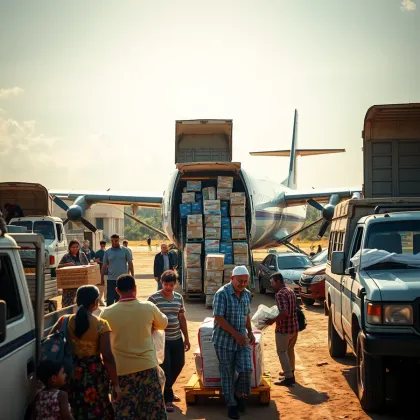
aid noun
Pronunciation: /AYD/
help such as money, food or support given to people in need
- The country received millions in aid after the flood.
- Foreign aid paid for new hospitals in the region.
- She works for an aid organisation in Kenya.
- My cousin sent aid to families affected by the war.
Common phrases foreign aidreceive aidaid organisation
Word family aid (verb)aid workerfirst aid
How to use it: Usually uncountable. Use 'aid' for help between countries or organisations, not small everyday favours.
- Similar
- assistance, support, relief
- Opposite
- harm, obstruction
- Often used in
- disasters, development projects, news reports
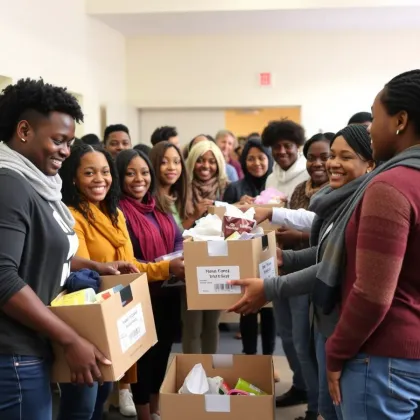
donate verb
Pronunciation: /doh-NAYT/
to give money or things to help people or organisations
- Thousands of people donated money after the earthquake.
- He donates ten percent of his salary to charity.
- We donated old clothes to the refugee centre.
- Would you donate blood if there was a shortage?
Common phrases donate money todonate bloodmake a donation
Word family donation (noun)donor (noun)
How to use it: Use 'donate to' for the receiver. 'Donate' suggests giving freely, not paying for something.
- Similar
- give, contribute, chip in
- Opposite
- take, withhold
- Often used in
- charities, disaster relief, fundraising events
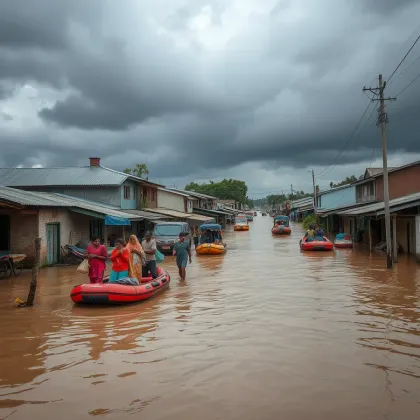
crisis noun
Pronunciation: /KRY-sis/
a time of serious danger or difficulty
- The country faced a food crisis after two years of drought.
- The government called an emergency meeting about the water crisis.
- Her family went through a financial crisis last year.
- Aid agencies responded quickly to the refugee crisis.
Common phrases face a crisiseconomic crisisin crisis
Word family crises (plural)
How to use it: A crisis is bigger and more urgent than a problem. Often used with adjectives like economic, political or humanitarian.
- Similar
- emergency, disaster, emergency situation
- Opposite
- stability, calm
- Often used in
- news, politics, personal life
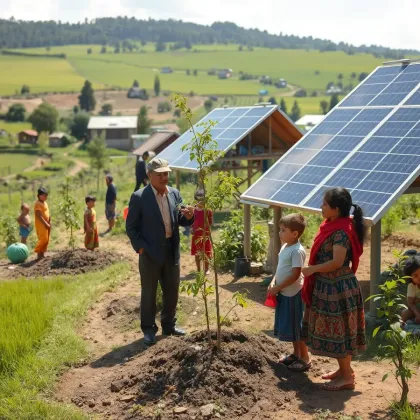
sustainable adjective
Pronunciation: /suh-STAY-nuh-bul/
able to continue for a long time without causing problems
- The project teaches farming skills, so the change is sustainable.
- We need a sustainable way to provide clean water.
- She tries to live a more sustainable lifestyle.
- Free handouts are helpful now but not sustainable in the long run.
Common phrases sustainable developmentsustainable solutionenvironmentally sustainable
Word family sustainability (noun)sustain (verb)unsustainable (adjective)
How to use it: Common in environmental talk and development talk. Often used with 'long-term'.
- Similar
- long-lasting, viable, self-supporting
- Opposite
- short-term, unsustainable
- Often used in
- environment, business, development projects

corruption noun
Pronunciation: /kuh-RUP-shun/
dishonest behaviour by people in power, especially for money
- Corruption meant the aid money never reached the villages.
- The report exposed corruption among government officials.
- Many people believe corruption is the biggest obstacle to development.
- He was arrested for corruption after taking bribes.
Common phrases fight corruptionpolitical corruptionend corruption
Word family corrupt (adjective/verb)corruptly (adverb)
How to use it: Uncountable noun. Often connected with officials, bribes and misuse of public money.
- Similar
- dishonesty, bribery, fraud
- Opposite
- honesty, integrity
- Often used in
- politics, business, news investigations
3 Reading
A short article looking at both sides of international aid.
In class, you read the text aloud. I help with pronunciation and natural rhythm, and then we talk about it.
Does Aid Really Help?
When a huge earthquake hit a small island last year, money and supplies arrived within days. Planes full of food, medicine and tents landed at the airport, and aid workers set up camps for families who had lost their homes. For many people, this is what international aid looks like at its best: fast, generous and life-saving.
Supporters of aid point out that a crisis can destroy a country's ability to help itself. When hospitals are underwater or roads are gone, outside help is often the only option. They also argue that aid builds friendships between countries and can support long-term projects, like schools and clean water systems.
But critics tell a different story. In some countries, aid money has disappeared through corruption, ending up in the pockets of officials instead of the people who need it. Others say that free food can hurt local farmers, because nobody buys their crops when everyone is receiving donated goods.
There is also the question of what happens after the cameras leave. A one-off donation might feel good, but it doesn't solve anything. Many experts now argue for sustainable aid: projects that train local people, create jobs and keep working long after the donors have gone home.
So is aid a good thing or a bad thing? The honest answer is probably both. It can save lives in a crisis, but it can also create problems if it's done badly. Perhaps the real question is not whether to give, but how to give wisely.
4 Comprehension
We check what you understood from the reading. You explain your answer in your own words. (The answers are under each question.)
-
What does 'aid' mean?
Show answer
Help such as money or supplies for people in need
Aid is help - money, food, medicine or support - given to people or countries in need.
-
Which sentence uses 'donate' correctly?
Show answer
He donated his old books to the library.
You donate things you give freely to help others or a good cause. The other sentences describe buying, paying or complaining.
-
In which situation would you use the word 'crisis'?
Show answer
A country running out of clean water for millions of people
A crisis is a serious, urgent and dangerous situation, much bigger than an everyday problem.
-
What does 'sustainable' mean?
Show answer
Able to continue for a long time without causing problems
Something sustainable can keep going over time without running out or causing harm.
-
Which situation is an example of 'corruption'?
Show answer
A mayor uses public money meant for schools to buy himself a villa.
Corruption is dishonest behaviour by people in power, especially using public money or position for personal gain.
5 Idioms and phrasal verbs
You find each expression in the reading and guess what it means. Then we practise using it to talk about your own life and work.
set up
From the readingaid workers set up camps for families who had lost their homes.
What do you think it means? Show meaning
to build or organise something so it is ready to use (similar: organise)
Example: They set up a small food bank in our town last winter.
- You can split it: 'set up a camp' or 'set a camp up' are both fine. ✓ set the tent up ✗ set up it
- Very common in everyday talk and in the news.
Your turn: Have you ever helped set something up, like an event, a group or a business? What was it?
end up
From the readingaid money has disappeared through corruption, ending up in the pockets of officials instead of the people who need it.
What do you think it means? Show meaning
to finally be in a place or situation you didn't plan (similar: finish somewhere)
Example: I planned to save the money, but it ended up paying for a new phone.
- The small word 'up' shows the final result, often a surprise. ✓ ended up in Paris ✗ ended to Paris
- Followed by 'in', 'with' or -ing: 'ended up staying home'.
Your turn: Tell me about a time something ended up differently from what you planned.
a one-off
From the readingA one-off donation might feel good, but it doesn't solve anything.
What do you think it means? Show meaning
something that happens only one time, not again (similar: one-time thing)
Example: The bonus was a one-off, so don't expect it next year.
- Picture it as 'one' single event, 'off' the normal pattern. Common in British English.
- Can be a noun ('a one-off') or an adjective ('a one-off payment').
Your turn: Do you prefer giving a one-off gift or helping the same person regularly? Why?
in the pockets of
From the readingaid money has disappeared through corruption, ending up in the pockets of officials instead of the people who need it.
What do you think it means? Show meaning
taken dishonestly by people in power (similar: stolen)
Example: Half the road budget ended up in the pockets of local politicians.
- The picture: money going straight into someone's pocket instead of where it should go.
- Usually negative — you'll see it in news stories about corruption.
Your turn: Do people in your country worry about public money ending up in the pockets of officials?
6 Sentence frames
Practice expressing ideas about the pros and cons of international aid.
We start with the simple frame and step up to longer, more natural sentences. You fill the gaps with your own ideas, and I help you sound more fluent.
Comparing two points of view
Grammar contrast connectors (but, while, however)opinion language
-
Simple
Some people say ___, but I think ___.
State the other view, then give your own simple opinion.
Example answers
- Some people say aid is wasted, but I think it saves lives.
- Some people say rich countries should help, but I think countries should fix their own problems first.
- Some people say aid is too expensive, but I think it's worth the money.
-
Stronger
While ___ can be ___, I believe ___ because ___.
Accept one side briefly, then give your view with a reason.
Example answers
- While emergency aid can be life-saving, I believe long-term plans work better because they build real skills.
- While giving money is fast, I believe sending experts is better because money can disappear.
- While aid helps in a crisis, I believe trade might help more because it creates jobs.
Giving pros and cons
Grammar on the one hand / on the other handhedging (might, could, probably)
-
Simple
The good thing about ___ is ___. The bad thing is ___.
Name one advantage and one disadvantage simply.
Example answers
- The good thing about aid is that it saves lives. The bad thing is that it can stop.
- The good thing about donations is that they arrive fast. The bad thing is that they don't last.
- The good thing about foreign aid is that it builds friendships. The bad thing is that sometimes it's wasted.
-
Stronger
On the one hand, ___; on the other hand, ___.
Present both sides in one balanced sentence.
Example answers
- On the one hand, aid helps countries recover from a crisis; on the other hand, it can make them depend on outside help.
- On the one hand, donating money is easy and fast; on the other hand, you never know exactly where it goes.
- On the one hand, aid brings jobs and supplies; on the other hand, it can hurt local businesses.
Imagining situations and consequences
Grammar second conditionalwould for hypothetical results
-
Simple
If I ___ , I would ___.
Simple hypothetical: what you would do.
Example answers
- If I had a billion dollars, I would donate it to clean water projects.
- If I were a leader, I would spend more on hospitals.
- If I could design an aid project, I would build schools.
-
Stronger
If my country ___, I would want ___ because ___.
Imagine a situation at home and explain your choice.
Example answers
- If my country faced a big crisis, I would want fast medical help because lives come first.
- If my country received aid, I would want training for local workers because that lasts longer.
- If my country had a drought, I would want help with wells and farming because water is everything.
7 Fill in the blanks
A quick practice with the new words: you choose the right word for each gap.
Word box aiddonatecrisissustainablecorruption
Last summer, a serious flood hit a small coastal town, and the government declared a national 1. Within days, people around the world began to 2 money, and planes arrived carrying 3 for thousands of families. Unfortunately, some of the funds were lost to 4, which made many donors angry. In the end, the most useful support was 5: local builders were trained to construct flood-proof houses, so the town is now much better prepared for the future.
Show answers
- crisis
- donate
- aid
- corruption
- sustainable
8 Sentence unscramble
You put the words in order and say the sentence out loud.
-
countrytheinafterearthquakethemillionsaidreceived
Show answer
The country received millions in aid after the earthquake.
-
fromoftenstopsneedaidwhoitpeoplecorruptionreachingthe
Show answer
Corruption often stops aid from reaching the people who need it.
-
aidlastgenerationsthatteachesskillssustainablefor
Show answer
Sustainable aid teaches skills that last for generations.
9 Discussion
The main speaking part of the lesson. We discuss each question together, and you use the new words and sentence frames. I ask follow-up questions and correct your mistakes as we go.
-

Imagine a powerful earthquake hits a country on the other side of the world. Within hours, news channels show destroyed buildings and families searching for relatives. Governments everywhere start announcing aid packages.
Do you think rich countries have a duty to help in a crisis like this, or is it just a kind choice? Why?
-

Some people say that when a country receives free food and goods for years, local farmers and shops can't compete. Others say that without that help, people would simply go hungry.
Which side do you find more convincing? Have you seen something similar happen in your own country?
-

Aid money sometimes disappears before it reaches the people who need it. Some donors now send experts and training instead of cash, hoping to avoid this problem.
If you donated a large amount of money, would you rather give cash or pay for training and equipment? What would worry you about each option?
-
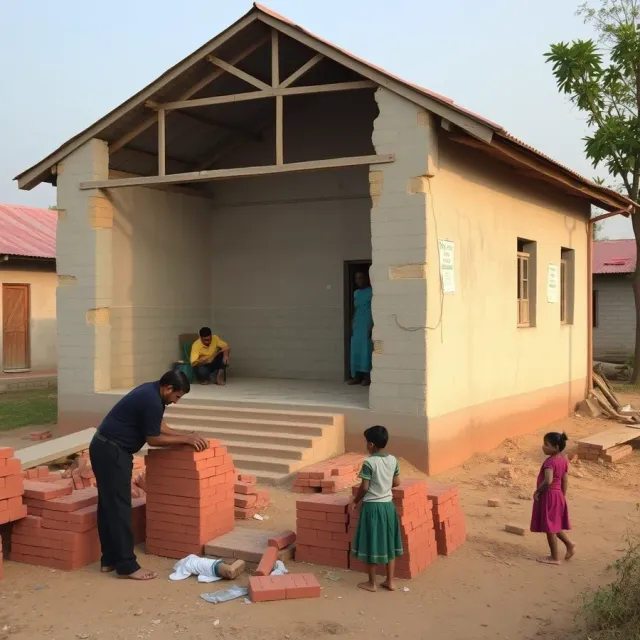
After a disaster, the first few weeks get all the attention and the money. But rebuilding schools, water systems and jobs takes years, and by then the world has moved on to other news.
Do you think the world gives up on countries too quickly? What would a smarter, more sustainable kind of help look like?
-

Imagine you are the leader of a country that has just been offered a huge aid package. It comes with conditions: the donors want a say in how the money is spent.
Would you accept the money with those conditions, or refuse it and try to manage alone? What would you do?
10 Quiz
A short review at the end of the lesson to check what you remember.
-
Which word describes help like money, food or medicine given to people in need?
Show answer
Aid
Aid is help - money, supplies or support - given to people or countries in need.
-
True or false: 'sustainable' describes something that only works for a short time.
Show answer
False
Sustainable means the opposite - something that can continue for a long time without causing problems.
-
If money meant for schools ends up in an official's pocket, this is an example of...
Show answer
Corruption
Corruption is dishonest behaviour by people in power, especially misusing public money.
-
Which word completes this sentence: 'The flood created a serious water ___ for the whole region.'?
Show answer
crisis
A crisis is a serious, urgent situation - a water crisis means a dangerous shortage of clean water.
-
True or false: a 'donor' is the person or organisation that gives money or goods.
Show answer
True
A donor gives; a donation is the thing given. Both come from the verb 'donate'.
-
If money "ends up in the pockets of officials", what has happened to it?
Show answer
It was taken dishonestly by people in power
The idiom means the money went to the wrong people — officials took it for themselves instead of using it for its real purpose.
Lesson created with PlanwiseESL.
Useful for: English for diplomats, UN staff and aid workers
More sample lessons
Talking About Inequality
Learn words to talk about inequality, like gap, privilege, disadvantage and discrimination, and use them to discuss fairness. A B2 lesson I teach live.
See the lesson → Level B2The Great Game: How Countries Compete for Power
Learn words to talk about geopolitics in English: alliance, sanctions, sovereignty, superpower and more. A B2 discussion lesson I teach live, one-to-one.
See the lesson → Level B2Diplomatic English: How to Disagree Politely
Learn how to disagree diplomatically in English: soften your words, push back politely and find common ground. A B2 speaking lesson I teach live.
See the lesson →All sample lessons: How to Stop Translating in Your Head When You Speak English · Health and Fitness Vocabulary in English · Vocabulary to Talk About Films in English · Vocabulary to Talk About Money in English · Vocabulary to Talk About the Environment in English · Words to Describe a Leader in English · Explaining a Technical Problem in English · Handling Price Objections in English · How to Keep a Conversation Going in English · Patient Handover English for Doctors and Nurses · Presenting Monthly Results in English · Understanding Contracts in Plain English · How to Answer Questions After a Presentation in English · How to Talk About Your Career Goals and Leadership in an Interview · What British Colleagues Really Mean: Polite, Indirect English at Work · Vocabulary to Talk About AI in English · Business Small Talk in English